

Wander By Frame | Prochazka

When I share our weekend plans with friends, I’m often met with puzzled looks. “What’s a packraft?” they ask. “Is it a boat, a raft, or something for whitewater rapids?” It’s clear that not everyone is familiar with packrafting, so I’m here to clear things up.

In this article, I’ll walk you through everything you need to know about packrafting—from the essential gear and techniques to top photography tips and unforgettable adventures on the water. Ready to discover why packrafting should be your next big adventure? Let’s dive in!

Article Content

What Excactly Is Packrafting?

Packrafting is more than just paddling a boat—it’s an adventure. A packraft is a lightweight, inflatable boat designed for exploring remote waterways, whether it’s rivers, lakes, or even oceans. The beauty of packrafting lies in its versatility. 

The boats are compact and durable, making it easy to carry them in your backpack, hike into the wilderness, and paddle back out. Essentially, you combine hiking, paddling, and sometimes other outdoor activities like biking or climbing, all in one epic adventure.

Our packrafts weigh around 4kg (8.8 lbs) each—not the lightest, but incredibly durable. They’ve allowed us to explore places we never dreamed of reaching, from serene lakes to thrilling whitewater rapids. It’s amazing how many new adventures and photography opportunities open up with a packraft.

Our packrafts are from the Czech brand RobFin; they are durable and great for whitewater.

How I Fell in Love with Packrafting

Believe it or not, my packrafting journey didn’t start with excitement. Three years ago, Kuba surprised me with an unexpected Christmas gift. I had been hoping for a new wide-angle lens, but instead, I got… an inflatable single boat. To say I was disappointed is an understatement. At the time, I didn’t want another hobby. We already had a garage full of gear, and I had zero interest in whitewater rapids.

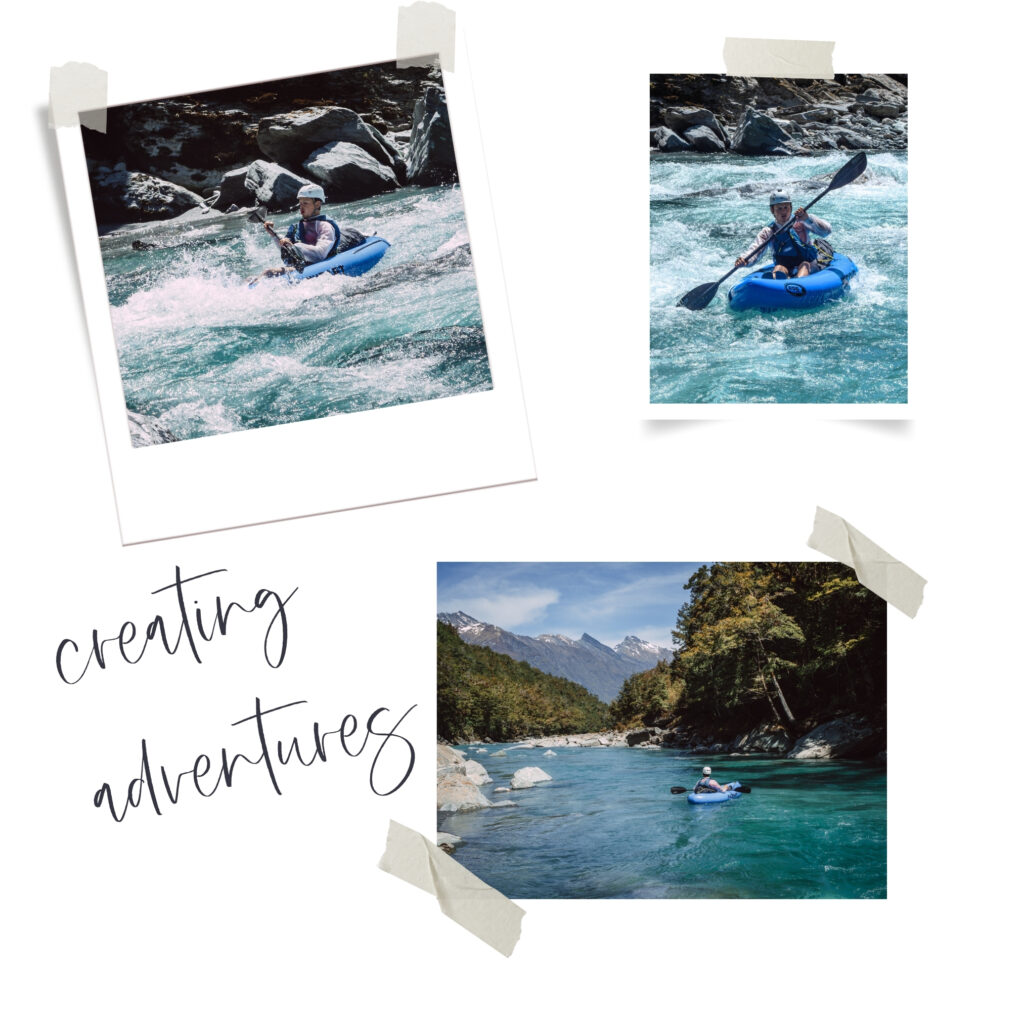
But Kuba convinced me to give it a shot. Our first trip was on an easy river with a Class I rapid. To my surprise, I didn’t fall in even once. (I wasn’t about to admit it to Kuba just yet, but I actually enjoyed it!) Over time, as Kuba trained for the Coast to Coast race here in New Zealand (race to cross from the West Coast to the East Coast of the South Island), he taught me how to handle Class II whitewater rapids. With his guidance and some extra training, I slowly gained confidence—and even started loving it.

Packrafting Photography Tips for Adventurers

Packrafting and photography are a match made in adventure photography heaven. For someone like me, passionate about capturing the beauty of nature, packrafting unlocked a new world of opportunities. Discovering emerald-green rivers and photographing them from unique perspectives became an obsession. However, taking a camera on the water comes with challenges, but I’ve found some great ways to make it work.

Protecting Your Gear: Waterproof Essentials

If you’re serious about photography while packrafting, investing in a high-quality waterproof bag is non-negotiable. I started with a simple, affordable waterproof bag to protect my camera and lens from unexpected splashes. To add an extra layer of protection, I placed the camera inside a dry sack along with soft clothes to cushion it against rocks in case I flipped.

Here’s my key tip: always stop on the riverbank when taking your gear out of the dry sack to avoid any mishaps. While I sometimes shoot directly from the boat, I only do this when I’m absolutely sure there are no rapids ahead! Safety first—both for you and your gear.

Packrafting on Matukitaki River, South Island, New Zealand.

Photography Settings Tips for Packrafting Adventures

Using the right camera settings is essential for capturing sharp, stunning photos while out on the water. Here are a few tips based on different types of shots:

1. Adventure Photography: Capturing a Packrafter on the Water

  • Goal: Freeze motion with a sharp, dynamic image.
  • Key Setting: Use a fast shutter speed—at least 1/800s.
  • Mode: Choose Manual (M) or Shutter Priority (S).
  • ISO: Adjust based on lighting conditions. A higher ISO will help in low light but avoid going too high to prevent grainy images.
  • Aperture: Optional, as the shutter speed takes priority in action shots.

2. Landscape Photography During Adventures

  • Goal: Achieve a deep depth of field so everything is in focus.
  • Key Setting: Set the aperture to F/8.0 or higher.
  • Mode: Use Manual (M) or Aperture Priority (A).
  • ISO: Aim for the lowest possible ISO to reduce noise and maintain image quality.
  • Shutter Speed: Not as critical, but ensure a steady hand if shooting without a tripod.

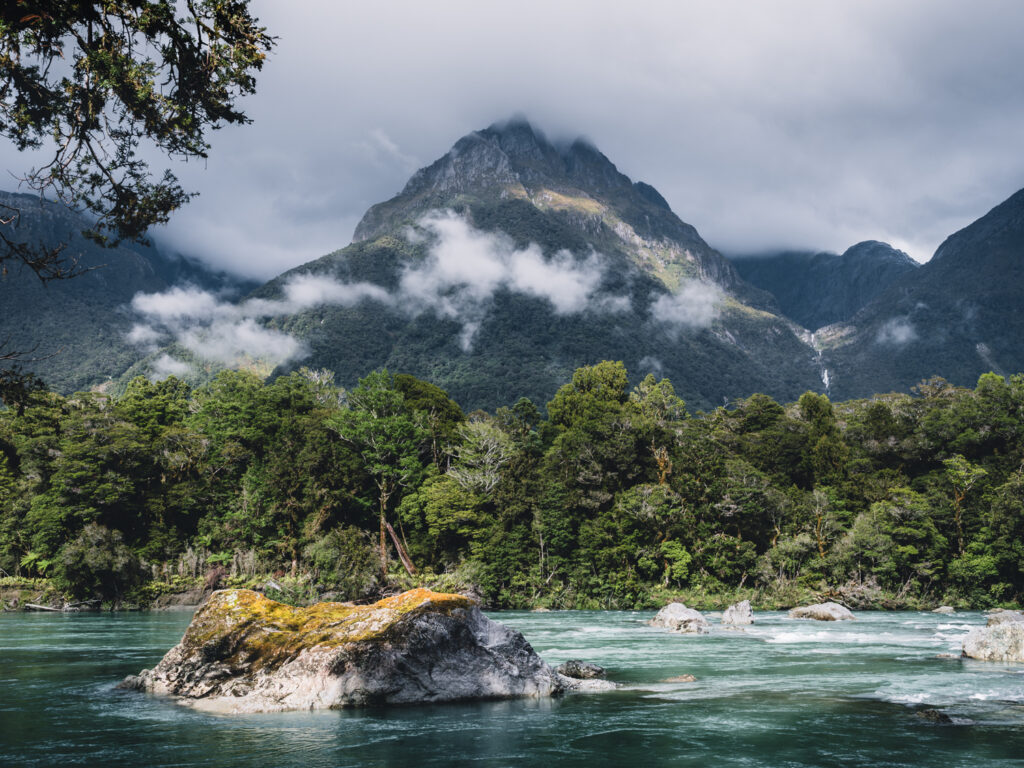
After rain, we got this view of the Hollyford River (South Island, New Zealand) as it makes its way toward the Tasman Sea. I captured the river’s dynamic beauty in its ever-changing landscape.

What Do You Need for Packrafting?

Packrafting requires a minimalist mindset, especially if you’re combining it with multi-day hiking trips. The boat itself has waterproof storage with a secure zipper, but you’ll still need to pack light. Here’s my essential gear list:

  • Packraft gear: Single or Double packraft, and paddle
  • Camping Gear: Sleeping bag, sleeping mat, and tent
  • Food & Cooking: Lightweight meals and a Jetboil stove
  • Clothing: Shorts, water-resistant long trousers, neoprene T-Shirt, water-resistant jacket, and neoprene booties
  • Safety Gear: Helmet, life vest, throw bag (for rescuing others in rapids), and an InReach device
  • Extras: Sunglasses, sunscreen, dry bags
  • Photography Gear: Camera, extra batteries, standard lens (25mm to 40mm), extra-wide lens (7mm to 14mm), filters, and tripod.

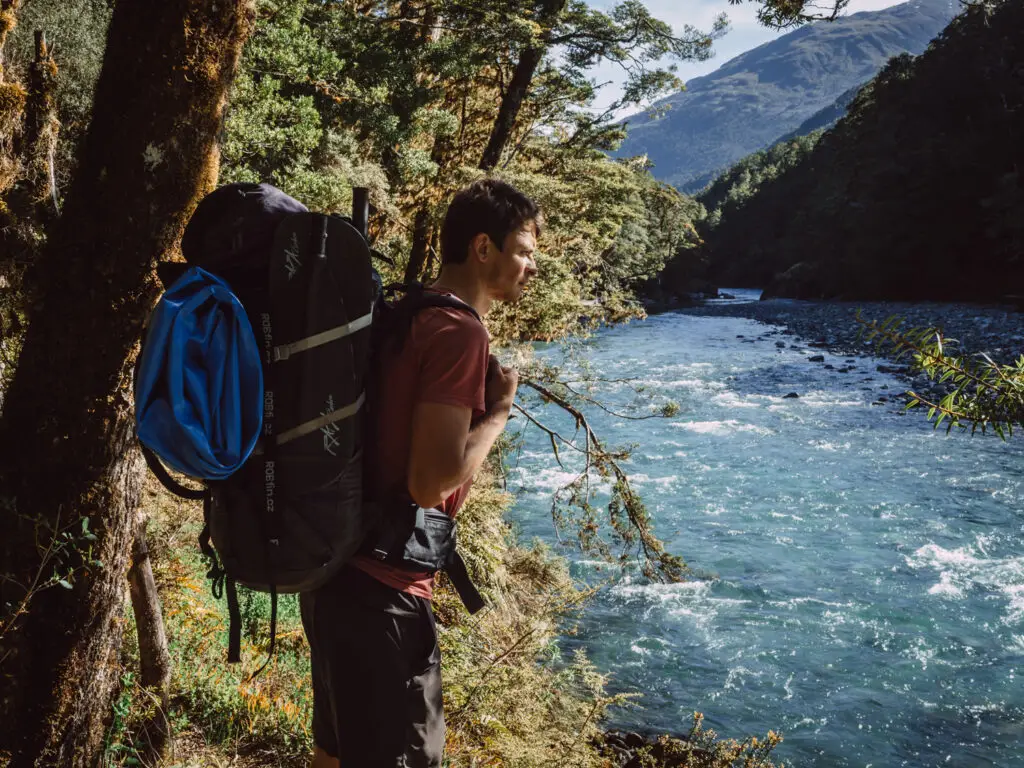
Even with a minimalist approach during packrafting, our backpacks are still heavy.
West Matukituki Valley, Aspiring National Park, New Zealand.

If you’re planning to tackle whitewater rapids, I highly recommend taking a training course. Safety always comes first—check river conditions, flow rates, and know your limits before heading out.

Packrafting Adventures: Our Favorite Moments

The 8-Day Fiordland Adventure

One of my favorite trips was an 8-day packrafting and hiking adventure in Fiordland National Park, New Zealand. This journey took us through the Hollyford and Pyke Rivers, creating a unique loop trail that felt like a true wilderness escape. We began by paddling down the Hollyford River toward the Tasman Sea. Afterward, we crossed the land and launched into the Pyke River, which flows in the opposite direction.

This adventure was all about self-reliance. With no support, no restaurants, and no showers, we carried all our food and essentials with us. To dry our wet clothes, we had to rely on building a fire—a humbling and rewarding experience.

Our 8-day hiking and packrafting adventure in Fiordland National Park, New Zealand.

Challenges Along the Way

One of the toughest parts of this trip was carrying everything on our backs. Our backpacks weighed around 25kg (55 lbs), and slogging through muddy terrain added to the difficulty. It was a physical and mental challenge, but it also became a true test of our relationship. I’m happy to say we made it through and are now confident we can tackle anything together! 😀

Crossing Tasman Lake

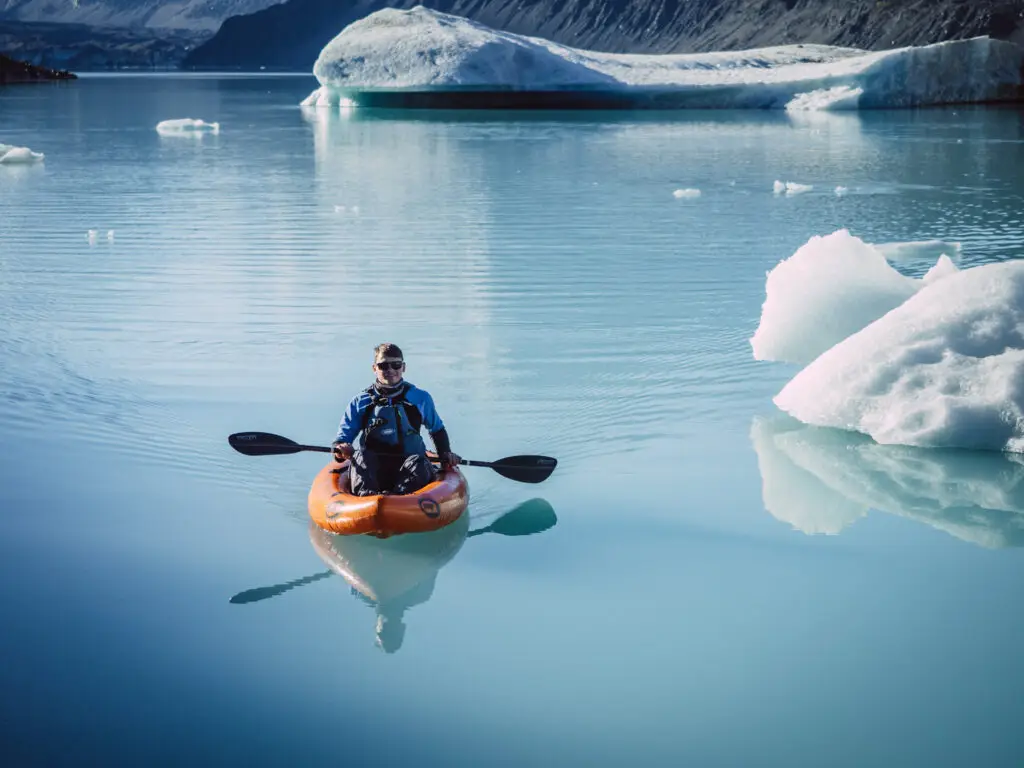
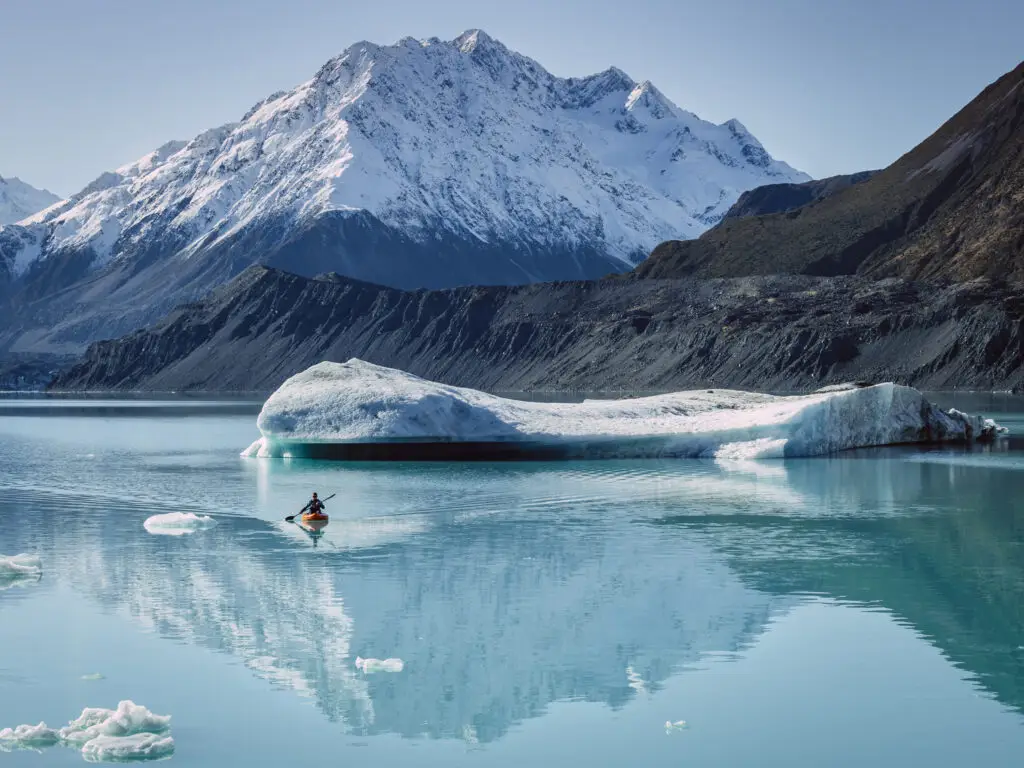
Another unforgettable adventure was crossing the glacier-fed Tasman Lake in Mount Cook National Park. Even in summer, the water was freezing cold, and icebergs floated all around us. These icebergs were deceptively massive; what you see above the surface is just a fraction of their true size. The rest lies hidden beneath the water, creating potential hazards reminiscent of the Titanic.

Paddling through this icy expanse was both humbling and awe-inspiring. It reminded us how small we are compared to nature’s immense power. It also highlighted the fragility of our planet. Seeing these glaciers slowly disappearing was a sobering moment and a call to consider the impact of our actions on the environment.

Packrafting among icebergs on Lake Tasman, Mount Cook National Park, New Zealand.

Why Packrafting Is the Ultimate Adventure for Nature Lovers

Packrafting combines breathtaking landscapes, challenging rapids, and peaceful moments on the water. Every trip feels like a new adventure, pushing boundaries and bringing you closer to nature. These experiences have taught me that the most memorable moments often come when I step far outside my comfort zone. Those are the moments I treasure most, and I can’t wait for the next adventure!

Paddling on a packraft between icebergs in Tasman Lake required some courage, but it was one of the best experiences.

Ready to Start Packrafting?

Packrafting isn’t just a sport; it’s a lifestyle. It’s about exploring the unknown, combining different activities, and immersing yourself in nature. Whether you’re looking for a serene paddle on a quiet lake or an adrenaline-filled journey through whitewater rapids, packrafting offers something for everyone.

If you’re an adventure photographer like me, it’s also a game-changer for capturing unique and stunning scenes. For more tips on photographing your adventures, check out my free e-book: 4 Key Tips to Break Away from Ordinary to Extraordinary Photography.

So, what are you waiting for? Grab a packraft, plan your next adventure, and experience the thrill of the great outdoors. Have fun, stay safe, and see you on the water!

Have fun and be safe!