

Solo travel photography in Iceland is one of the most rewarding adventures a photographer can experience. With its dramatic waterfalls, black sand beaches, rugged fjords, and endless golden light, Iceland offers breathtaking scenes at every turn. Whether you’re chasing the Northern Lights or capturing puffins on a cliffside, traveling solo gives you the freedom to explore at your own pace and truly connect with the landscape. As a solo traveler, preparing for Iceland’s unpredictable weather is key to successful landscape photography.
In this article, I’ll share my solo travel photography journey with my ups and downs, must-see top Iceland photography locations that should be on every photographer’s bucket list, photography tips on how to capture stunning images, my travel tips, and what to pack for your own photography solo adventure in the land of fire and ice.
Article Content
Chasing a Dream to Iceland
When we planned our trip to Europe to visit family after the COVID lockdowns, an incredible opportunity to join a spring photography workshop in Iceland practically fell into my lap. Naturally, I booked a spot right away. The itinerary was set, accommodations arranged, and all I had to do was show up with my camera, ready to soak in Iceland’s dramatic scenery. Everything was perfect… until it wasn’t.
Just five weeks before our trip, I received the dreaded email—the workshop was canceled. My heart sank. Was my dream slipping away? Since I was already going to be in Europe, I started to wonder—could I make this happen on my own?
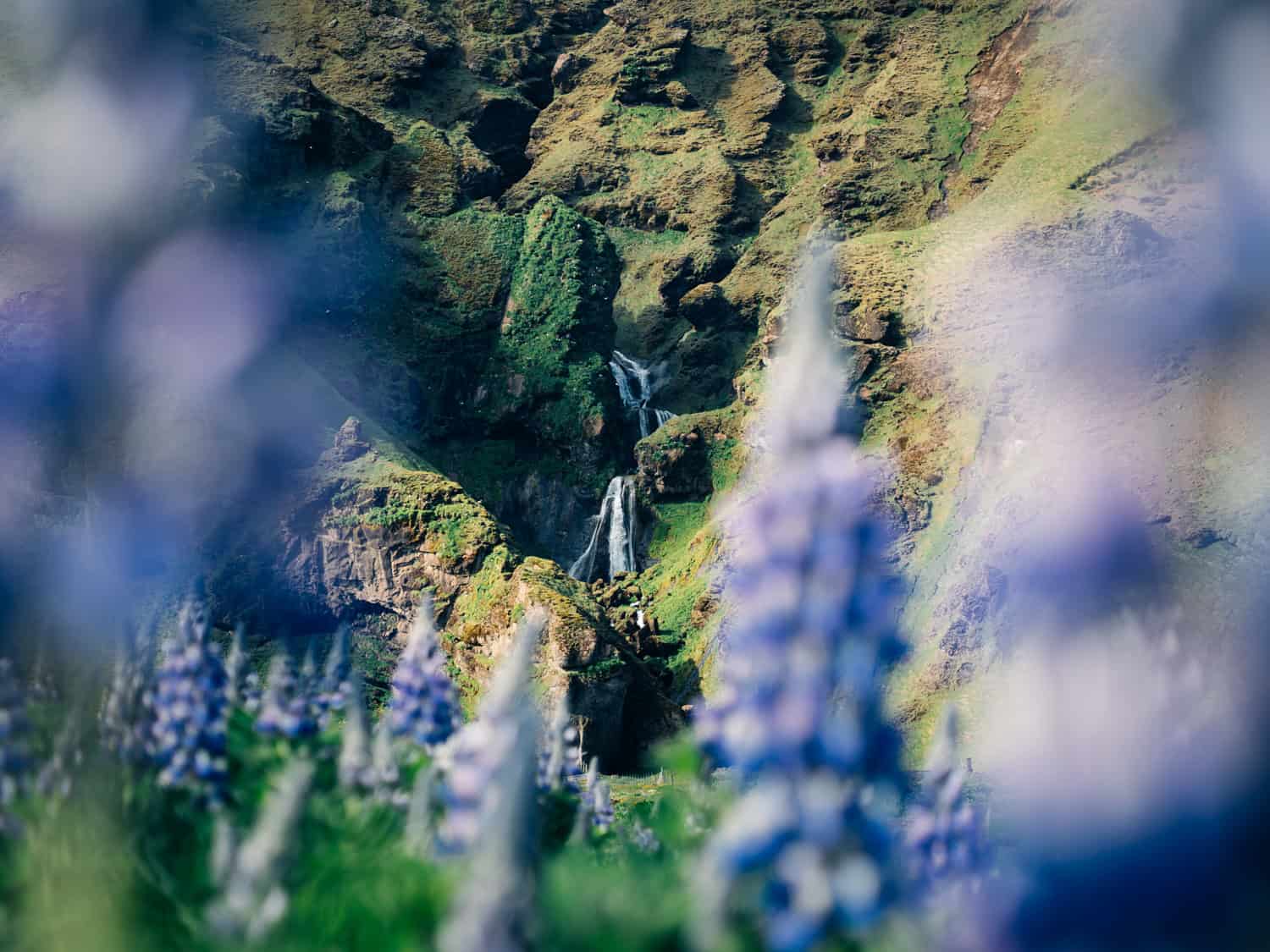
Traveling in Iceland in spring has another advantage — vibrant lupines bloom across the landscapes. This photo captures an unnamed waterfall near the village of Vík in South Iceland, a hidden gem for solo travel photography.
The Birth of a Solo Travel Photography Adventure in Iceland
That’s when it hit me—why not go solo? Although I’d never done anything like that before, it felt like the perfect chance to push my boundaries. No structured itinerary, no group schedules—just me, my camera, and the open road. Moreover, it seemed like the ideal opportunity for a much-needed mental break. A quick search later, and I had booked a direct flight from the Czech Republic to Reykjavík. I rented a Kia Ceed, grabbed a paper map (yes, old school!), and just like that—I was off.
Travel Tip #1: Prepare Your Budget for Solo Adventure
It’s crucial to prepare enough money for the trip. Even if you plan to camp, Iceland is one of the most expensive countries overall. The biggest expense will likely be the car rental, so make sure you budget accordingly.
A Stepping Out of My Comfort Zone
When I arrived at the airport in Reykjavík, it was 2 a.m., and I had no accommodation booked. I managed to sleep at the airport, but the only seats available were located near the exit door, which kept opening frequently. As a result, I spent a chilly few hours until 7 a.m., when my car rental company finally picked me up. Not the ideal start to a trip, especially since I was eager to start driving right away.
Travel Tip #2: Book a Place to Rest Upon Arrival
Even if you’re keen to be spontaneous, booking a place to sleep before hitting the road is essential—especially for a photography trip where energy is needed for sunrise and sunset shots.
To keep costs low and flexibility high, I turned my rental car into a tiny home, folding down the seats to create a cozy sleeping setup. Iceland’s spring weather is unpredictable, so I had to be ready for anything. What I didn’t expect? Sunset at midnight and sunrise at 2 a.m.! While the long daylight hours offered endless photography opportunities, they also threw my sleep schedule into chaos.
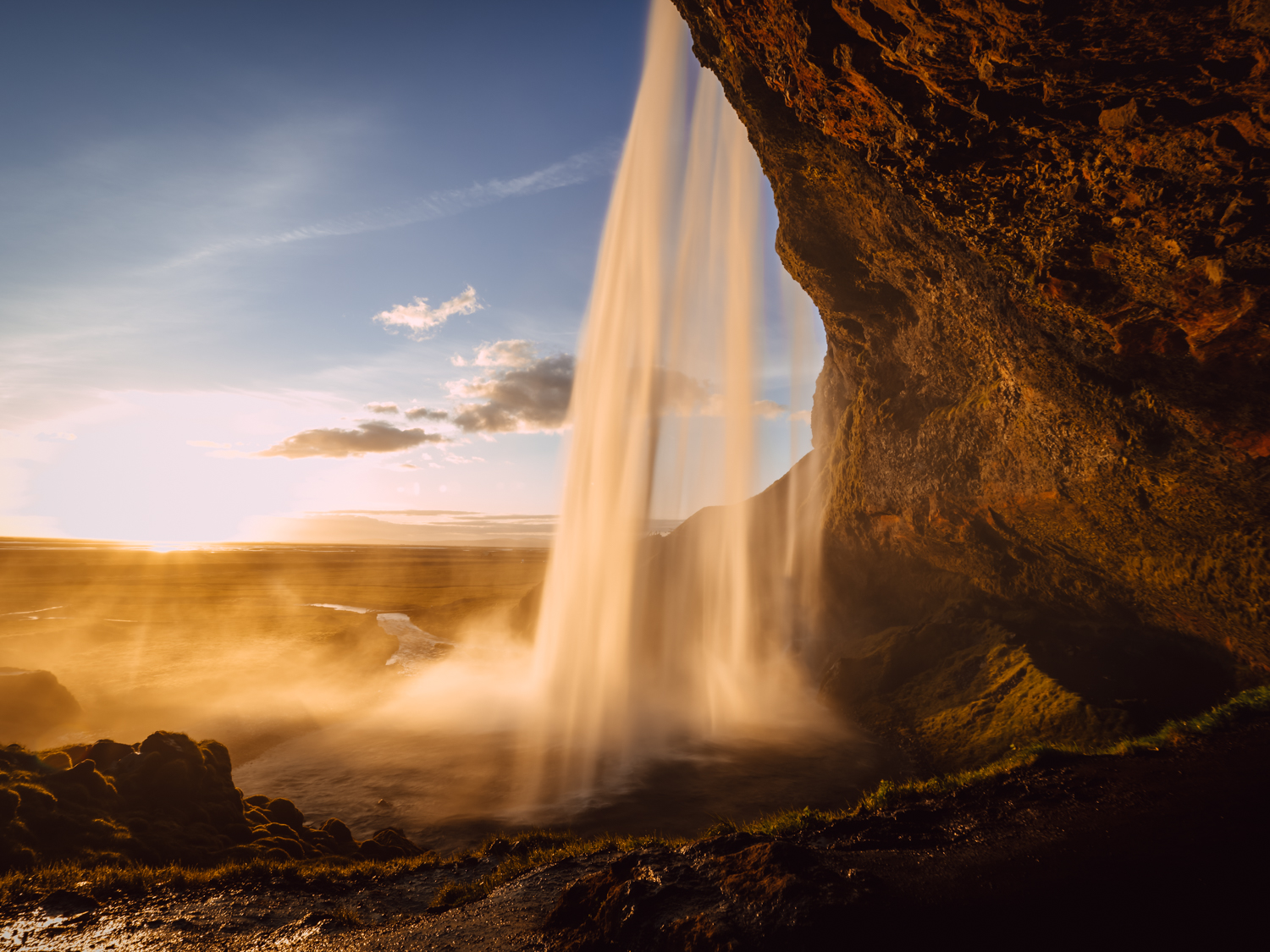
Seljalandsfoss waterfall at sunset — one of Iceland’s most iconic photo spots where you can walk behind the falls. I was exhausted and out of my comfort zone, but moments like this made it all worth it. Be prepared to get soaked and keep wiping your lens — the spray is real!
Stop Thinking, Let’s Go Shoot!
As I drove toward Þingvellir National Park, excitement mixed with doubt. Should I be home with family instead of chasing a dream? Was I crazy for doing this alone? But Iceland is one of the safest countries in the world, and I had imagined this trip so many times—it was time to embrace it. I reminded myself of the real reason I was there: photography, seeing Arctic puffins, and proving to myself that I could do this solo!
Photography Tip #1: Embrace Iceland’s Moody Weather for Stunning Shots
Iceland’s weather changes constantly, and lighting conditions can shift in an instant. To stay flexible, I always shoot in RAW format, which allows me to adjust my exposure and details during post-processing. If you’re new to this, don’t worry—just make sure your camera is set to RAW+JPEG for added flexibility. Additionally, shooting in manual mode gives you full creative control over your shots, ensuring you capture Iceland’s landscapes exactly as you envision them.
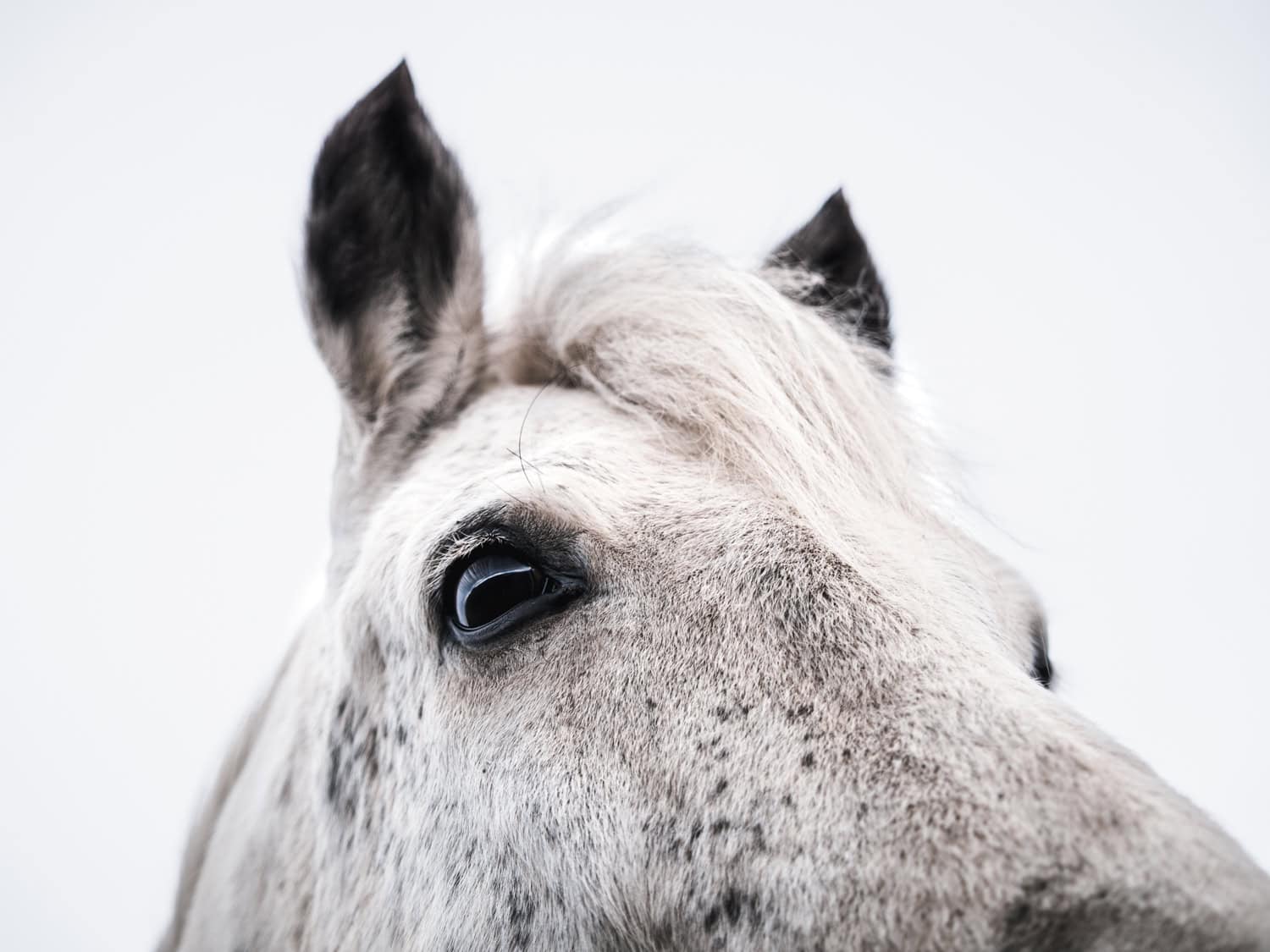
Icelandic horses may be pony-sized, but they’re incredibly tough—adapted to survive Iceland’s harsh conditions year-round. Beautiful and strong animals!
Roads in Iceland: A Solo Photographer’s Challenge
Icelandic roads can be a surprise for many tourists. One moment you’re driving on smooth, brand-new asphalt, and the next, you’re navigating gravel roads! Furthermore, if you want to explore the heart of Iceland, be ready for F-roads. These roads are only accessible to 4×4 vehicles, and if your rental car isn’t 4×4, you’re not allowed to drive on them.
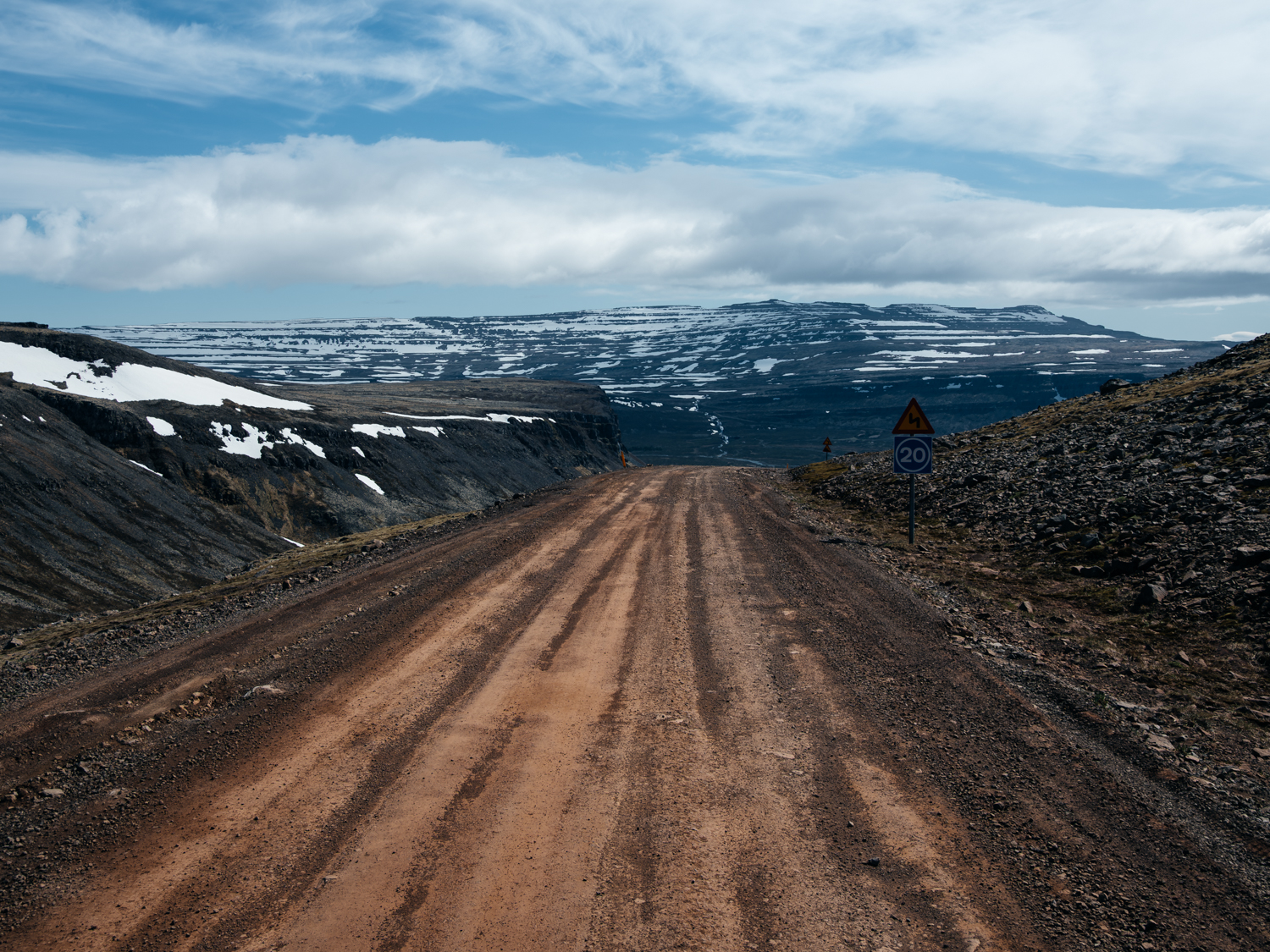
You might think this is an F-road, but it’s actually Road 60 — the main road through Iceland’s remote Westfjords. A scenic route perfect for solo travel photography.
Travel Tip #3: Stay Connected when you are on a Solo photography adventure
I rented a remote Wi-Fi router with my car, ensuring I had unlimited internet access throughout my journey. This was especially handy for checking weather forecasts and staying in touch with family. Unfortunately, I didn’t get a chance to use it much, as F-roads are only open in summer, and I was visiting Iceland in spring, meaning those roads were still covered with snow.
The Golden Circle of Iceland – Þingvellir National Park
My first stop was Þingvellir National Park, part of the Golden Circle. Although it’s quite touristy, the park is magnificent. Unfortunately, the weather didn’t cooperate—it was rainy and cloudy, with very dark and moody conditions. As a result, my images reflected that dramatic atmosphere.
Travel Tip #4: Pay for Parking
Most tourist locations, including Þingvellir, have paid parking. Luckily, Iceland is modern, and you can easily pay by card, so you won’t need cash.
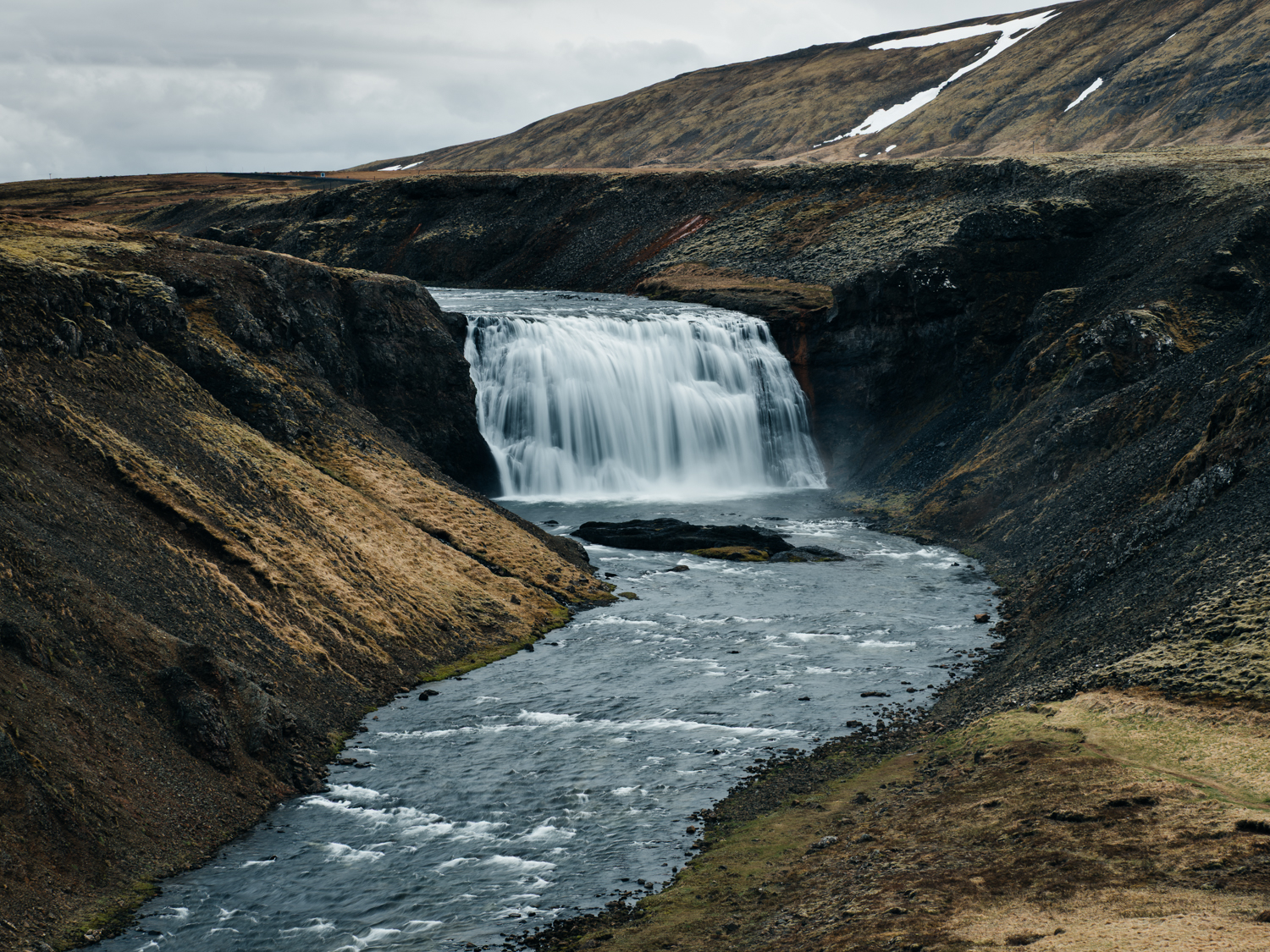
On my way out of Þingvellir National Park, I discovered this unnamed waterfall. You never know what you’ll come across during your solo adventure in Iceland!
I didn’t stay long here, as I wanted to focus on other photography spots. My next destination was the Snæfellsnes Peninsula.
Discovering the Snæfellsnes Peninsula: Iceland’s Miniature
If you’re planning a trip to Iceland, the Snæfellsnes Peninsula is an absolute must-see. Known as “small Iceland,” this region offers a taste of everything the country is famous for: from expansive lava fields and towering mountains to the mystical Helgafell, also known as the “holy mountain.” Whether you’re a landscape photographer or simply a lover of nature, Snæfellsnes delivers breathtaking scenery at every turn.
On my visit, I camped near Kirkjufell, hoping for a spectacular sunset and sunrise. Unfortunately, both were obscured by clouds. I caught a glimpse of the mountain in the morning, but the sun never showed its face. Iceland’s weather can be unpredictable, and as a photographer, you quickly learn that good conditions don’t always happen when you want them. For me, the sun became more of an obstacle than an ally during my journey—especially with sunsets at midnight and sunrises at 2 a.m., making natural light a challenge for capturing the perfect shot.
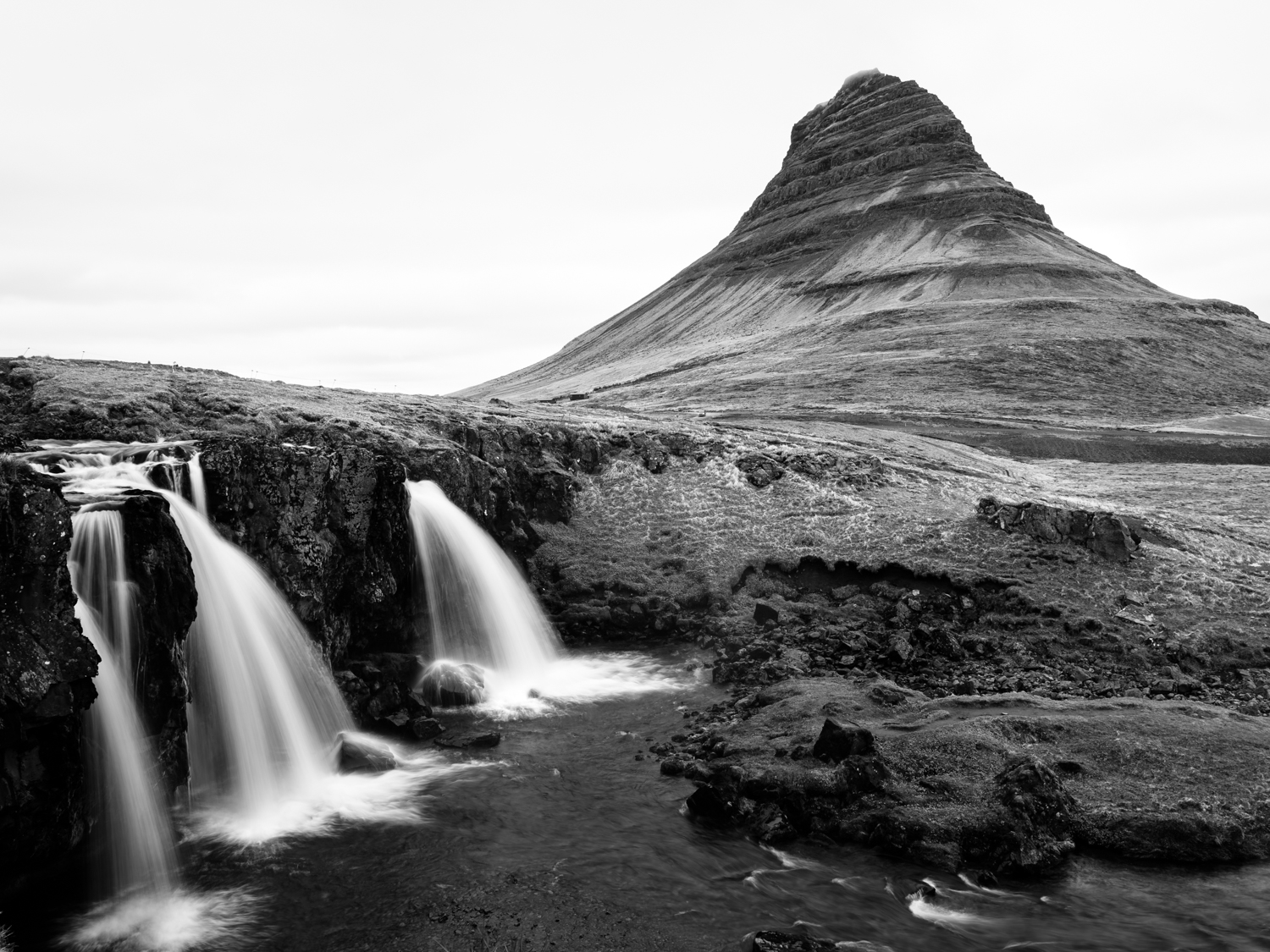
Kirkjufell is a majestic mountain and one of Iceland’s most iconic photography locations, especially stunning at sunrise and sunset. Although I didn’t get ideal natural light during my visit, the dramatic conditions made for a striking black and white photo that still captures the mountain’s beauty.
After spending two days in the area, I decided to take a different route north, which led me onto a rough gravel road littered with deep potholes. This “adventure” was actually a common feature in the Westfjords, where many roads are similarly rugged.
Photography Tip #2: Embrace Iceland's Moody Weather for Stunning Images
While overcast skies and rain might seem disappointing, they can actually create some of the most dramatic and atmospheric images. I found that adjusting my exposure compensation to slightly underexpose the shot (-0.3 to -1) added a bold contrast and brought out Iceland’s rugged beauty. Here’s where using manual mode truly becomes invaluable! By controlling your shutter speed and aperture, you can ensure the light adapts to whatever unpredictable weather conditions you’re facing.
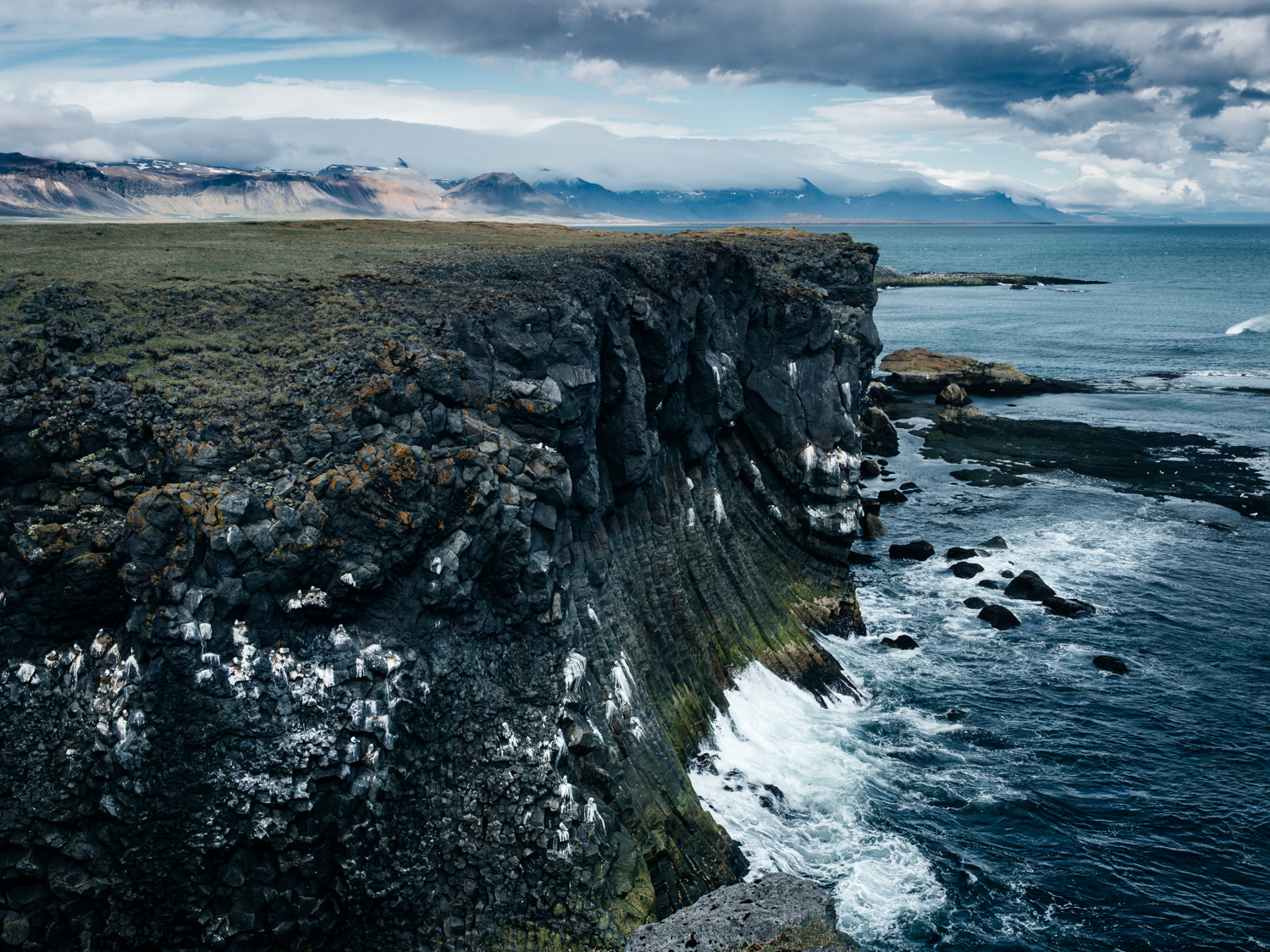
The southern coast of the Snæfellsnes Peninsula features Arnarstapi’s dramatic ocean cliffs — a must-visit spot for landscape and coastal photography in Iceland.
Venturing into the Remote Westfjords: A Solo Photographer's Icelandic Dream
At the car rental counter, I mentioned my plan to drive through the Westfjords. The attendant’s raised eyebrow made it clear this was an uncommon route for tourists. But this only fueled my determination. The Westfjords are isolated, rugged, and authentic—offering a side of Iceland that many never see.
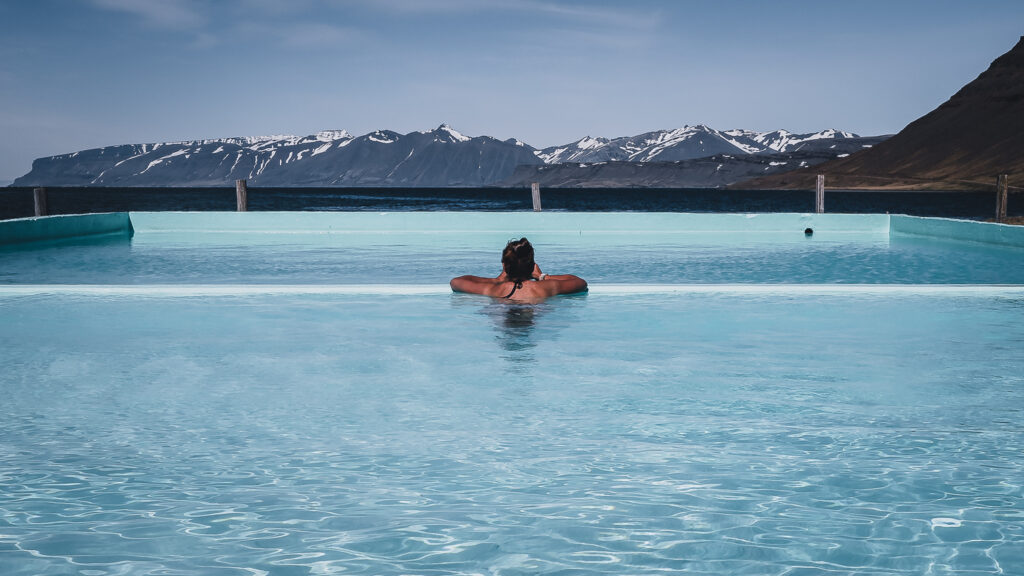
A self-portrait from my solo photography adventure—enjoying a remote hot pool in the Westfjords, all to myself.
With gas stations few and far between, I stocked up on groceries and planned my journey carefully. It took me three days to reach Ísafjörður, the northernmost town in the Westfjords, after navigating a narrow 8 km tunnel.
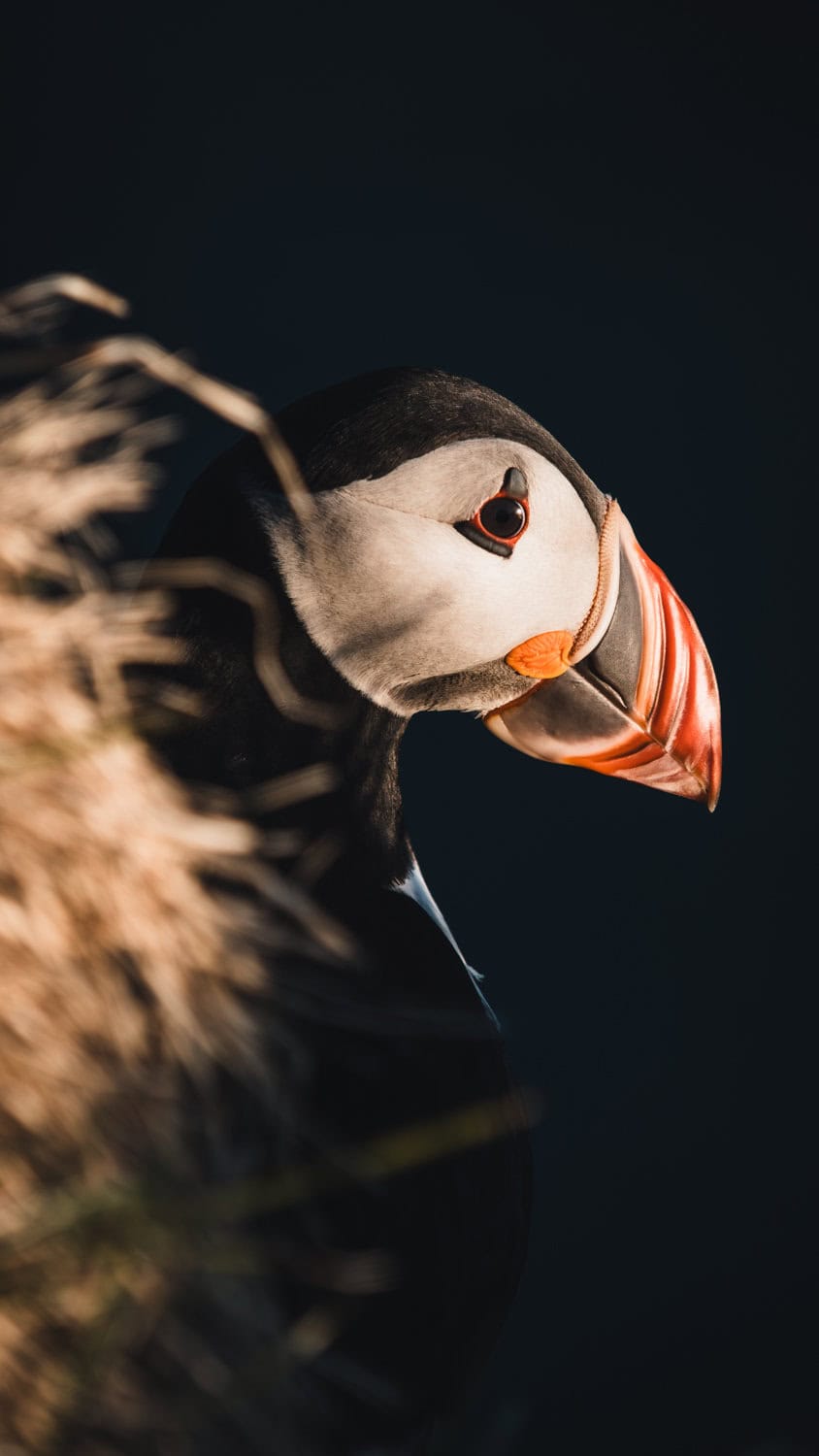
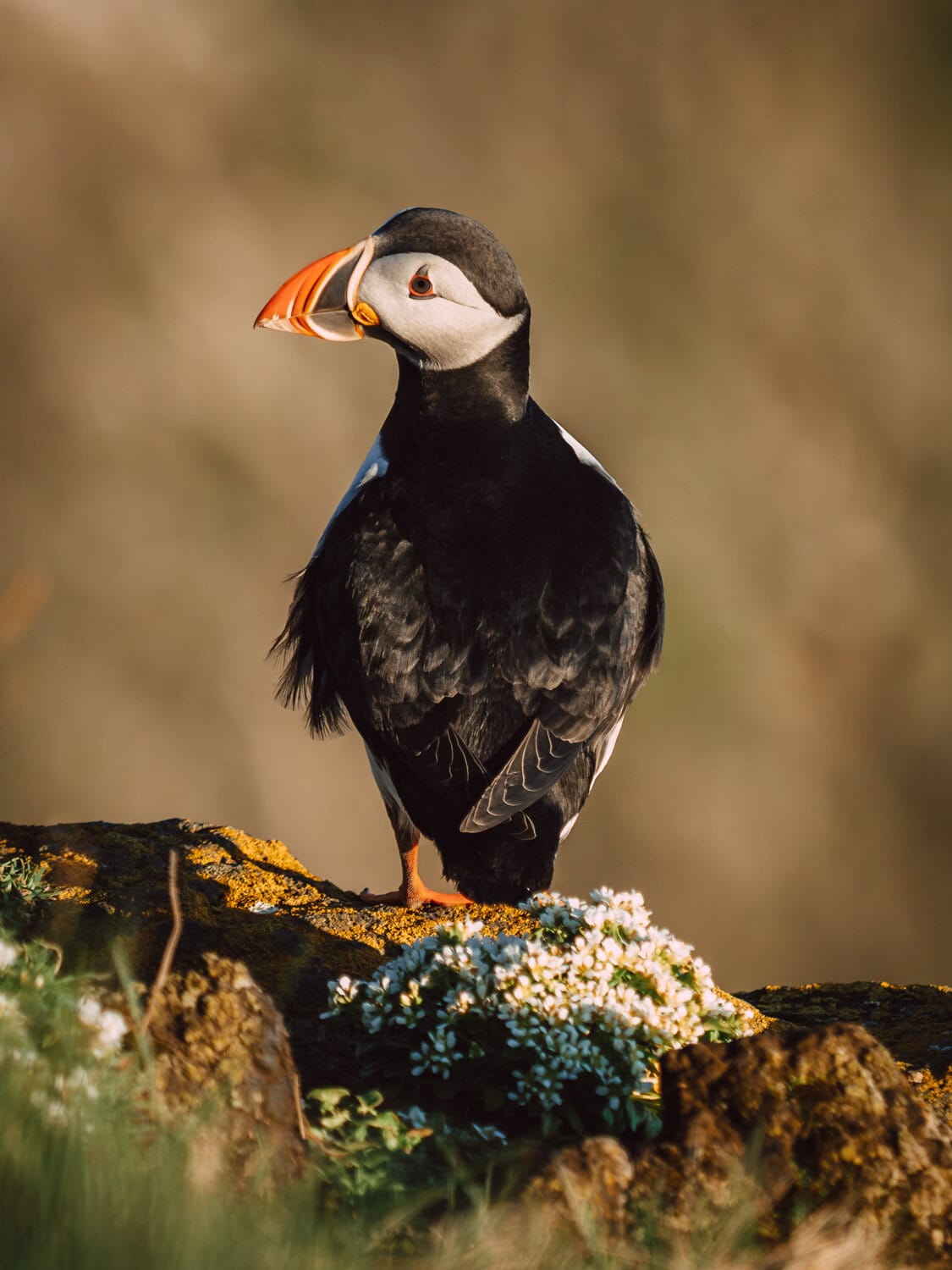
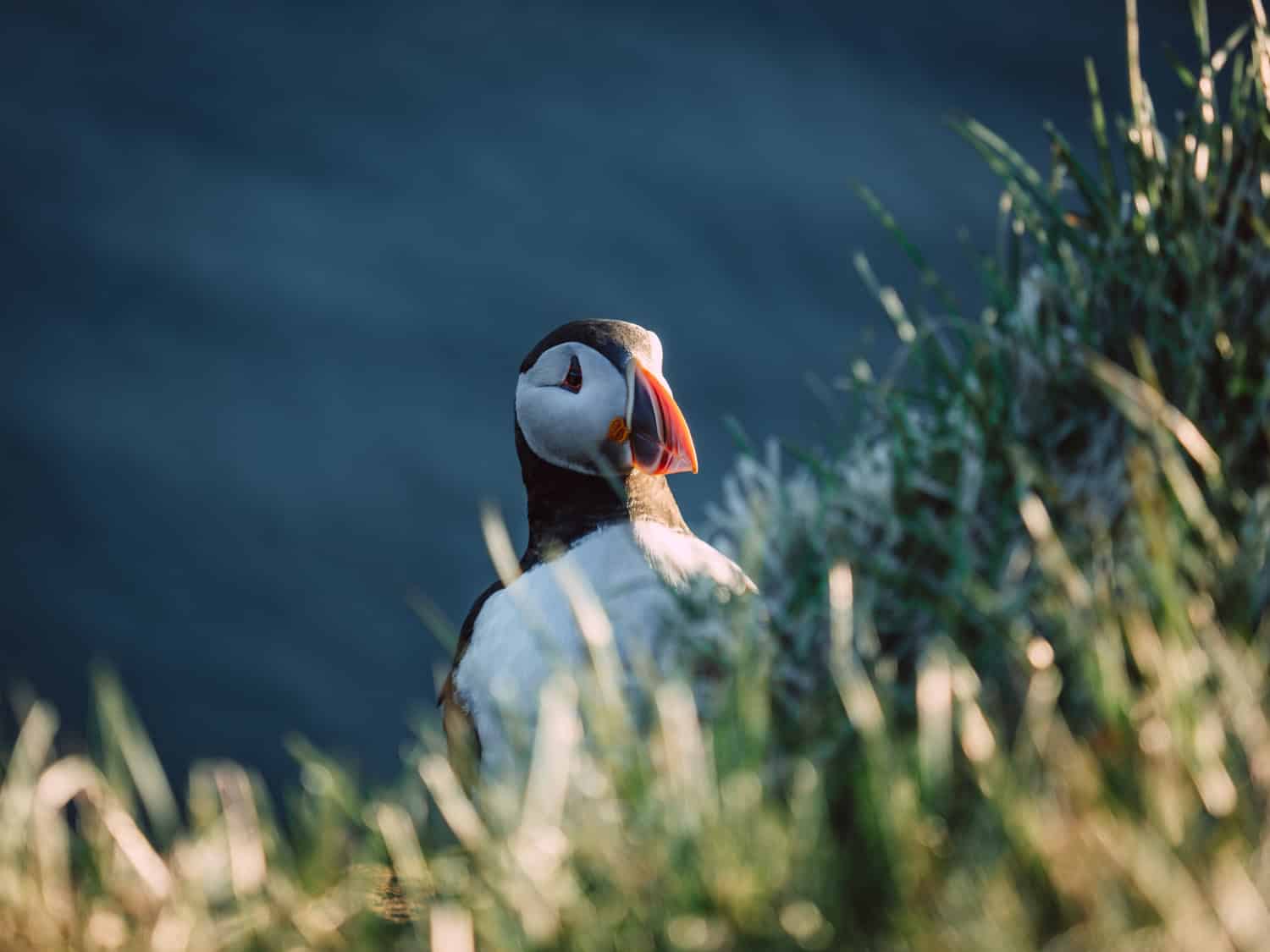
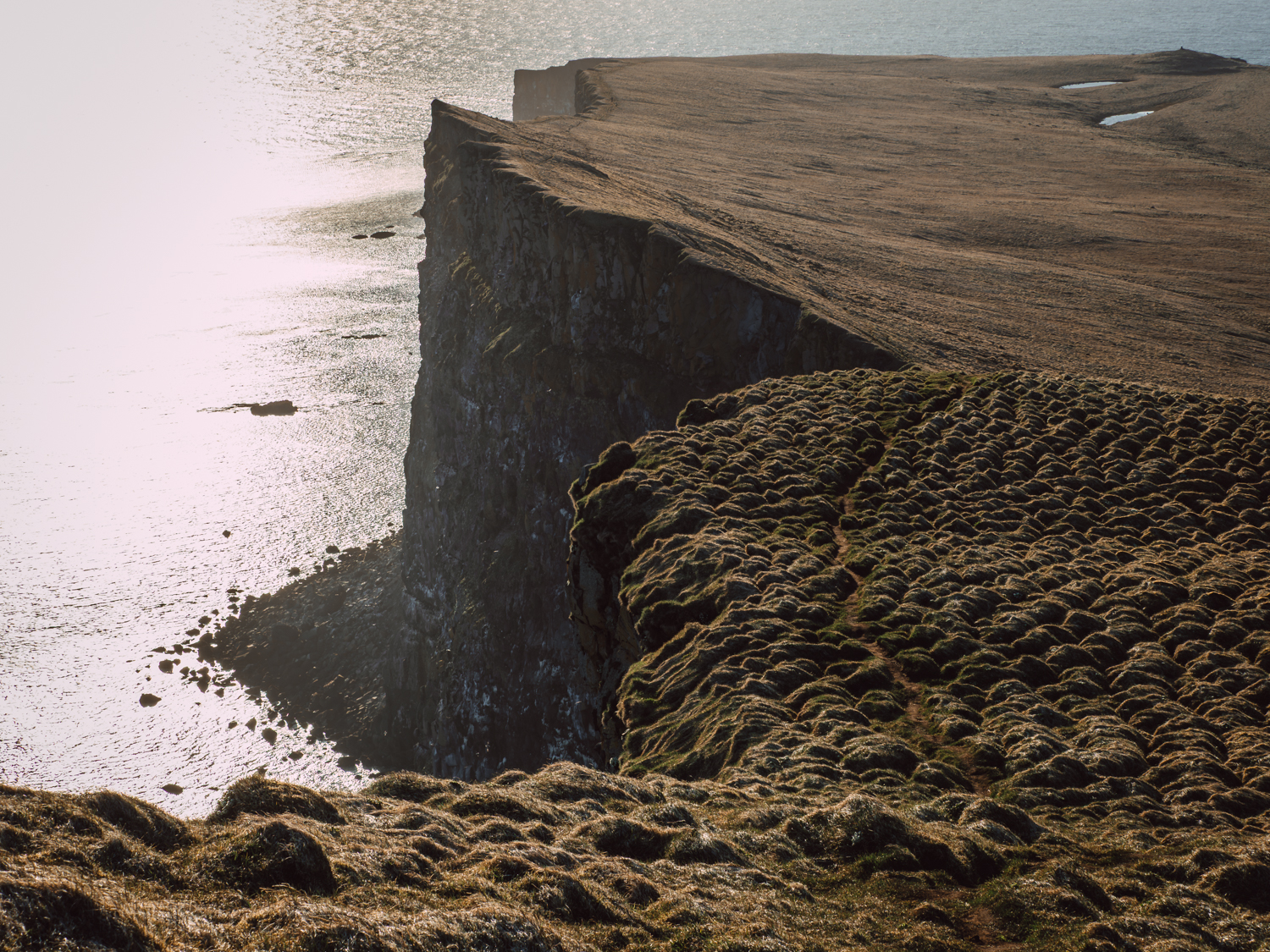
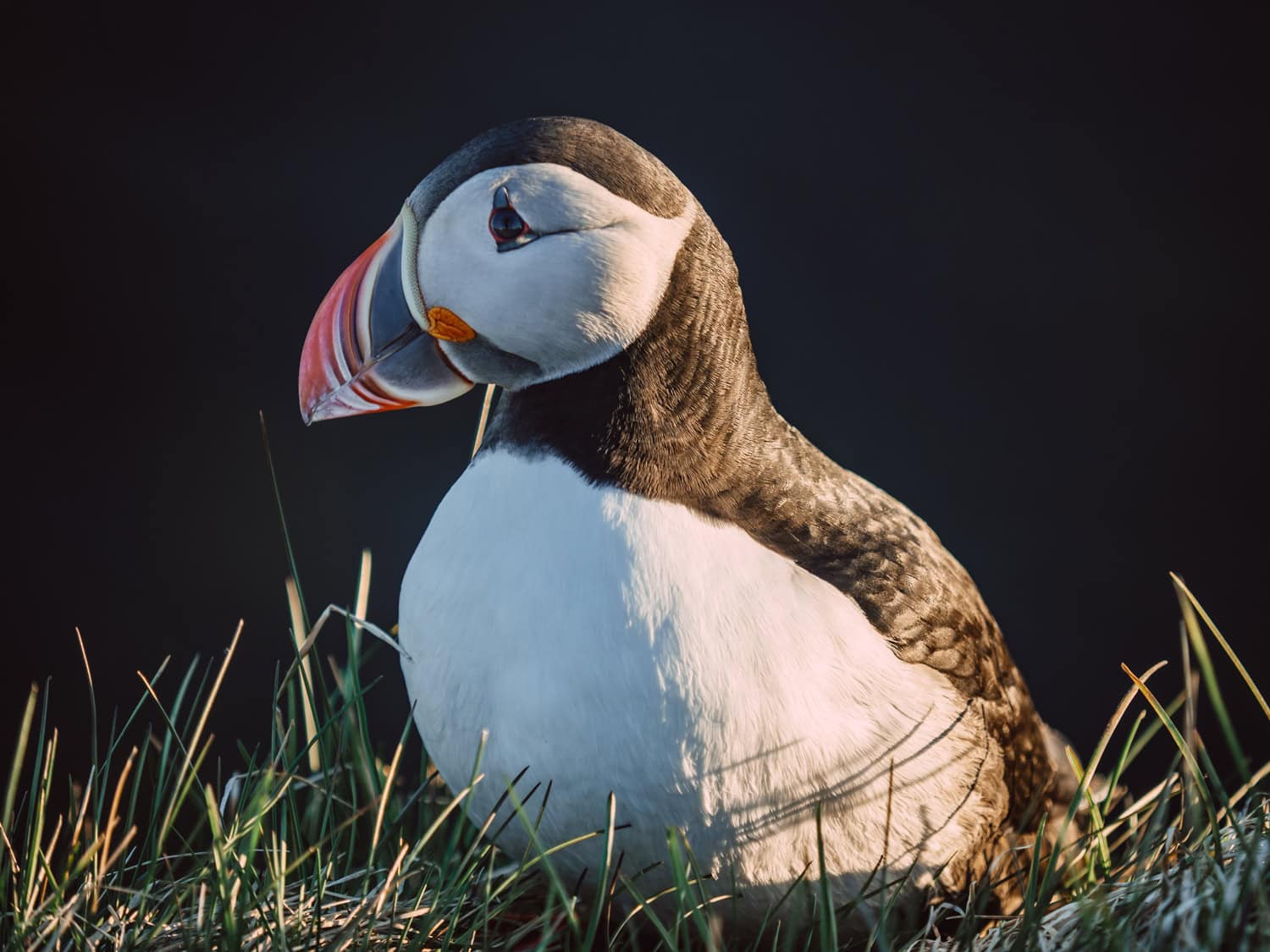
One of the highlights of this trip was puffin nesting season, which I had timed perfectly for. These cute birds, often mistaken for clumsy fliers, are surprisingly fast. One of the best places to spot puffins is at Látrabjarg, Europe’s largest bird cliff.
Puffins nesting at Látrabjarg cliffs in Iceland — one of the best solo travel photography spots in spring, especially during the midnight sunset around 12 a.m.
How to Photograph Puffins in Iceland: Tips and Settings
If you’re photographing puffins, don’t let their appearance fool you. These birds are quick, and capturing them requires a fast shutter speed, much like any action shots in adventure photography. Here’s how I set up my camera:
➜ Shutter Speed: At least 1/800s to freeze motion
➜ Mode: Use Manual (M) or Shutter Priority (S) for full control
➜ ISO: Adjust according to lighting conditions (keep it low in bright light, higher in low light)
➜ Aperture: Focus on shutter speed over aperture for action shots
➜ Focus Mode: Use AI Servo on Canon, or AF-C on most other brands to keep the birds sharp
➜ Burst Mode: Turn on continuous shooting to capture multiple frames in quick succession
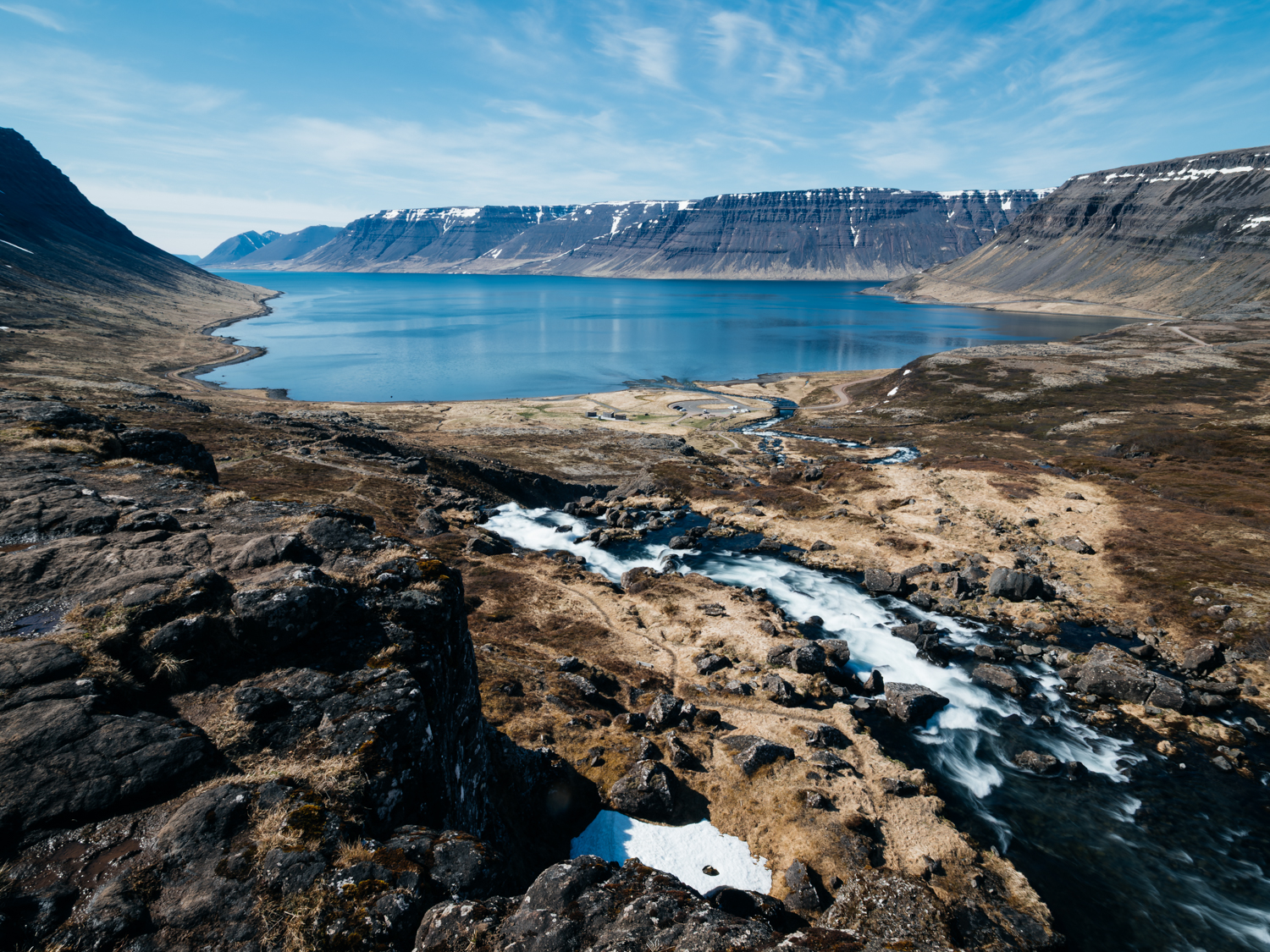
View from Hæstahjallafoss waterfall in the Westfjords of Iceland. After this scenic stop, the road to Ísafjörður—the region’s only city—continues through a unique one-way tunnel stretching 8 km.
The Westfjords are sparsely populated, with just a few farms, gravel roads, and hot pools scattered throughout. I drove 750 km in a single day to reach the eastern part of Iceland, escaping the rain in the Westfjords. This decision turned out to be a perfect one.
Chasing Better Weather in Eastern and Southern Iceland
While it was exhausting to make the long drive, the reward was worth it: better light conditions for my landscape shots. The eastern and southern parts of Iceland are more populated, with perfect asphalt roads and small towns that offer plenty of shops with fresh food—a welcome change after my time in the isolated Westfjords.
Travel Tip #5: Invest in Windshield Insurance
If you’re renting a car, I highly recommend paying extra for windshield insurance. Many roads in Iceland are unsealed, and loose rocks are a constant hazard. Unfortunately, my windshield cracked when a passing car kicked up a stone, but thankfully, my extra insurance covered it. Without it, the repair would have been costly.
In the east, I made my way back to Reykjavík for my flight, but not before stopping at Stokksnes—home to Iceland’s famous black sand beach and lagoon. The stark contrast between the dark volcanic sand and the towering Vatnajökull glacier made for a stunning photograph. After a heavy rain, the mist cleared, offering a dramatic view of the lagoon.
Photography Tip #3: Use a Tripod for Long Exposure Shots
With unpredictable light, a tripod is essential for capturing long exposure shots of waterfalls and waves. I used mine to make the most of the dramatic conditions, resulting in some of my best images.
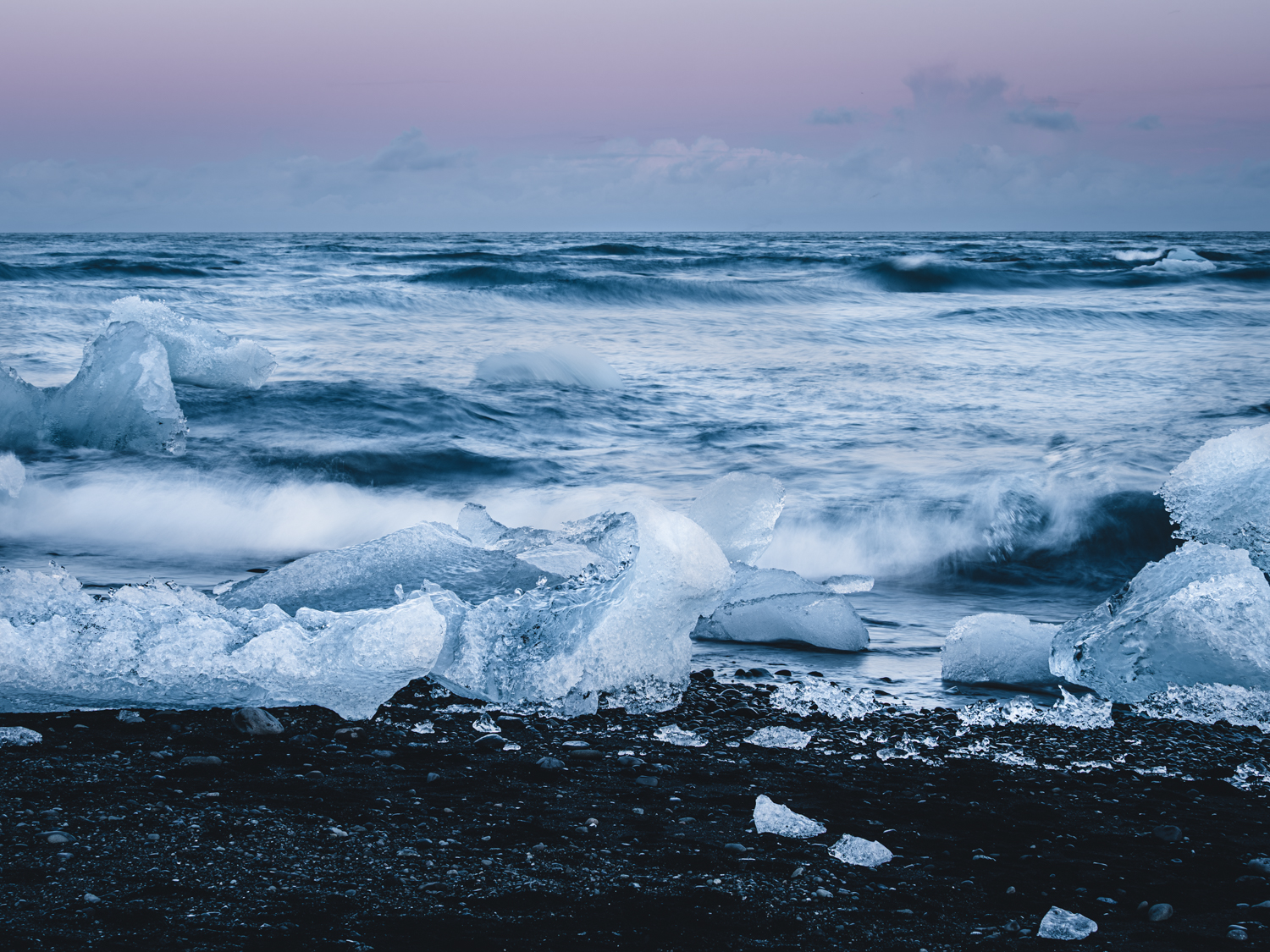
Another highlight in the south was Jökulsárlón, a glacier lake with chunks of icebergs washing ashore on the black sand beach. I spent an entire night photographing these “ice diamonds,” not even taking a break to sleep. The surreal beauty of the place was truly captivating.
Jökulsárlón Diamond Beach in Iceland — one of the best photography spots in the world, glowing with ice diamonds during the magical hour.
Photography Tip #4: Use Reflections for Impact
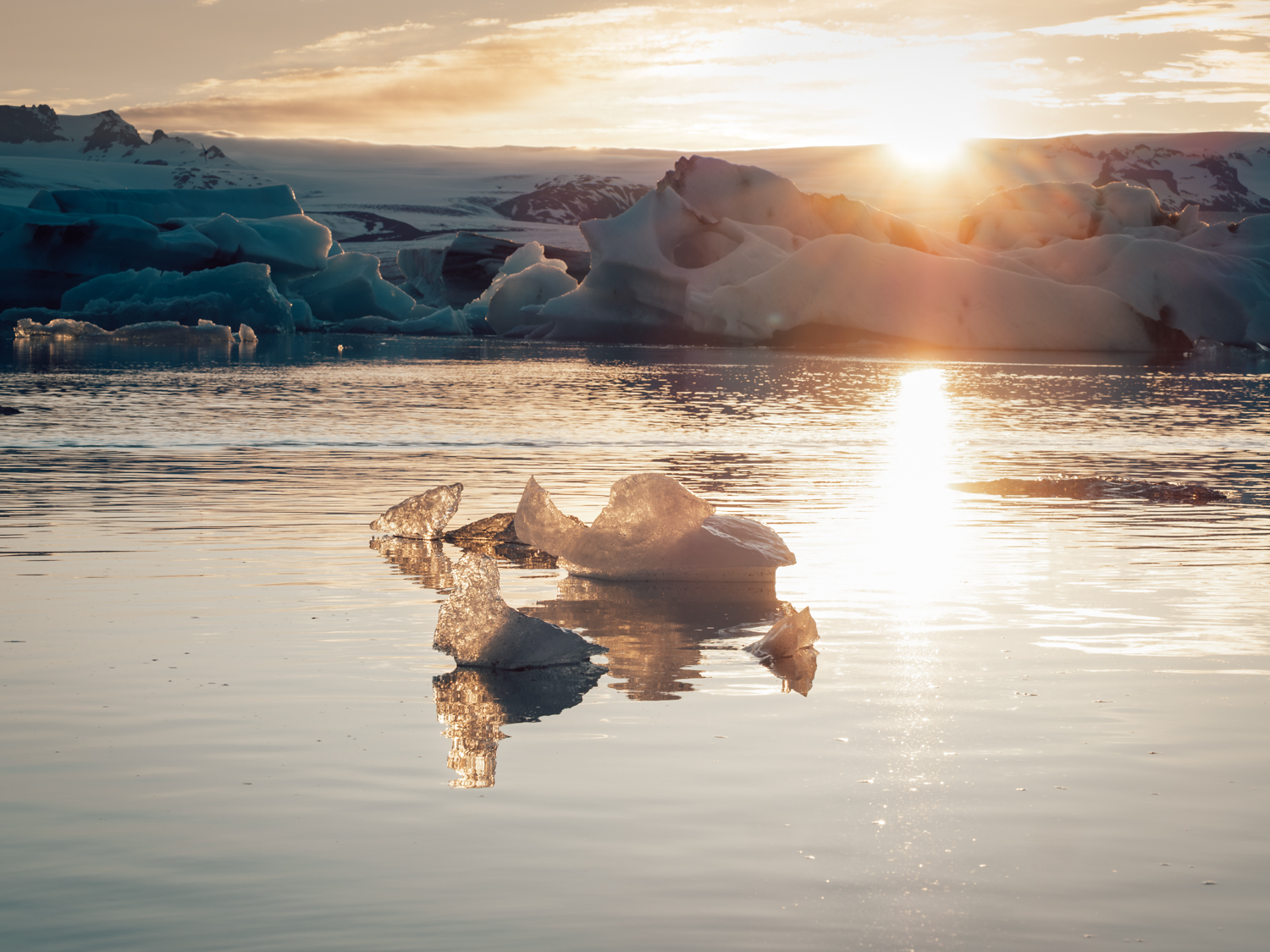
After a rainstorm, I took advantage of puddles to create reflections of the icebergs and mountains. These mirrored shots added a striking element to my photos and helped to emphasize the dramatic atmosphere of the landscape.
Jökulsárlón Glacier Lagoon at sunset — stunning reflections of floating ice chunks add depth and drama to this iconic Iceland photography location.
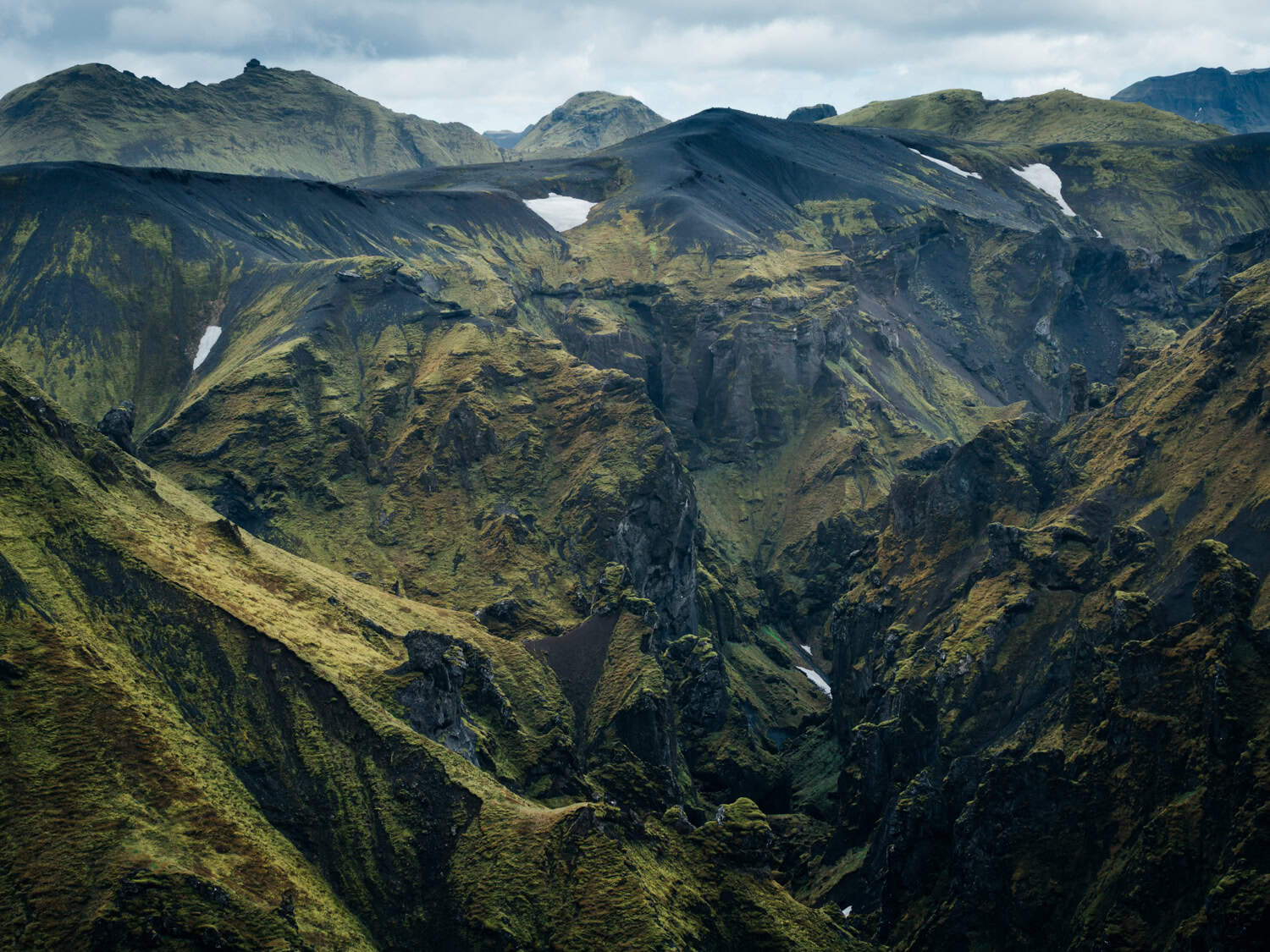
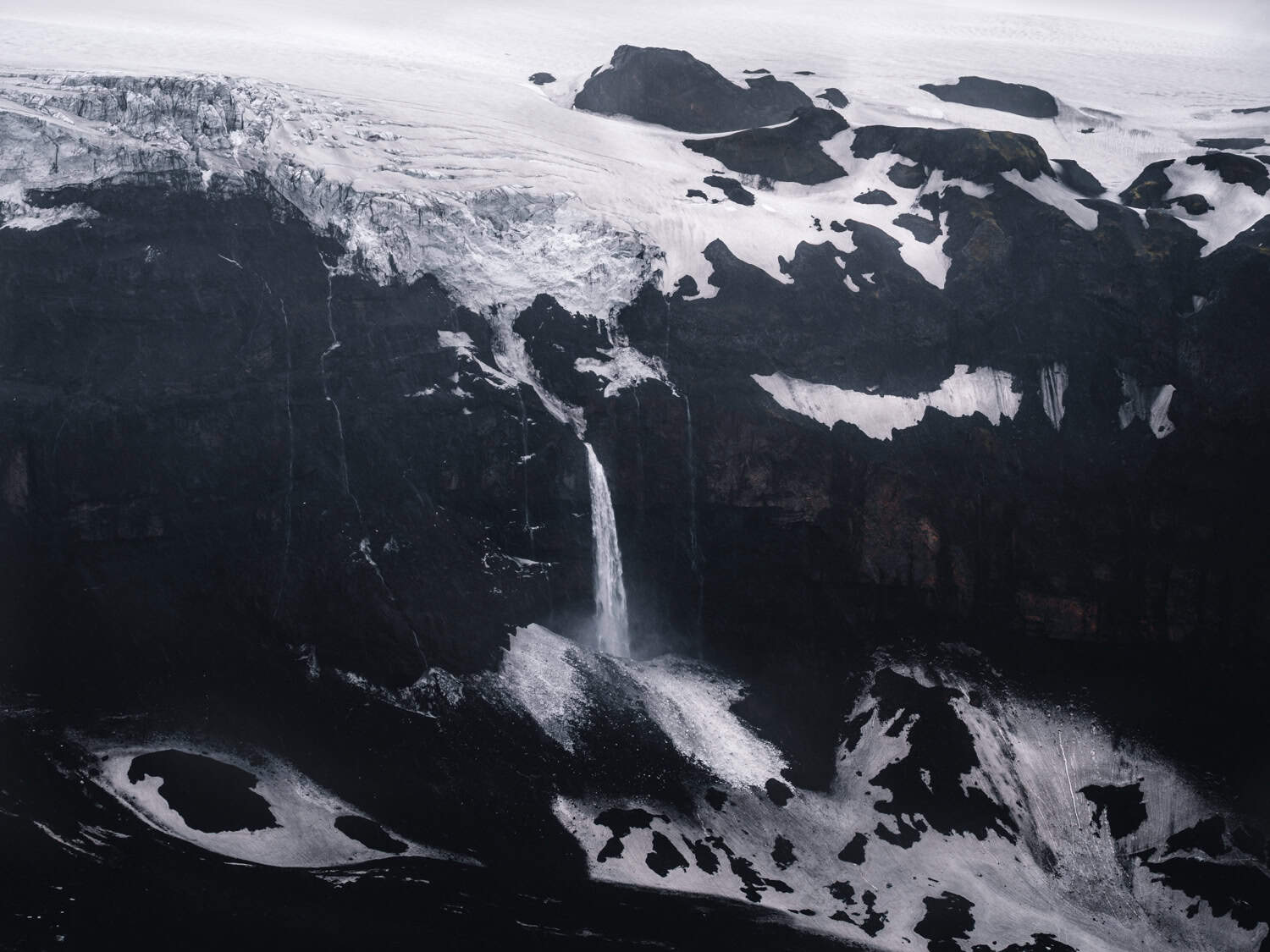
Another hidden gem in southern Iceland is Þakgil , a remote spot with a beautiful campground nestled among green mountains. After a short hike, I reached the base of the Mýrdalsjökull glacier, where the rain added to the area’s dramatic atmosphere.
Iceland’s Road 214 leading to Þakgil (Pakgil) is a scenic gravel road surrounded by lush green hills and glacier views. At the end lies a hidden campsite with hot showers — a perfect base for solo travel photography and hiking adventures.
My Must-Have Gear for a Solo Photography Trip
For my solo journey across Iceland, I had to pack light but smart. The weather in Iceland, even in spring, can be cold and unpredictable, so I made sure to bring the following essentials:
✅ Camera gear: Wide-angle, telephoto, and standard lenses
✅ Tripod: A must for long exposure shots
✅ Warm layers and waterproof gear: Essential for Iceland’s weather
✅ Sleeping mat and down sleeping bag: To stay warm during chilly nights
✅ Headlamp: For early morning or late-night shoots
✅ Power banks and extra batteries: Cold weather drains battery life quickly
✅ Paper map: Just in case you lose service
Reflecting on My Photography Icelandic Journey
Looking back on my Icelandic adventure, I can confidently say that it exceeded all my expectations. Though the lighting conditions weren’t always ideal, I managed to capture everything I had hoped for. However, the journey was exhausting—9 days of non-stop driving, photographing, planning, and navigating unpredictable weather. If I could do it again, I’d focus on a smaller section of Iceland and give myself more time to truly explore.
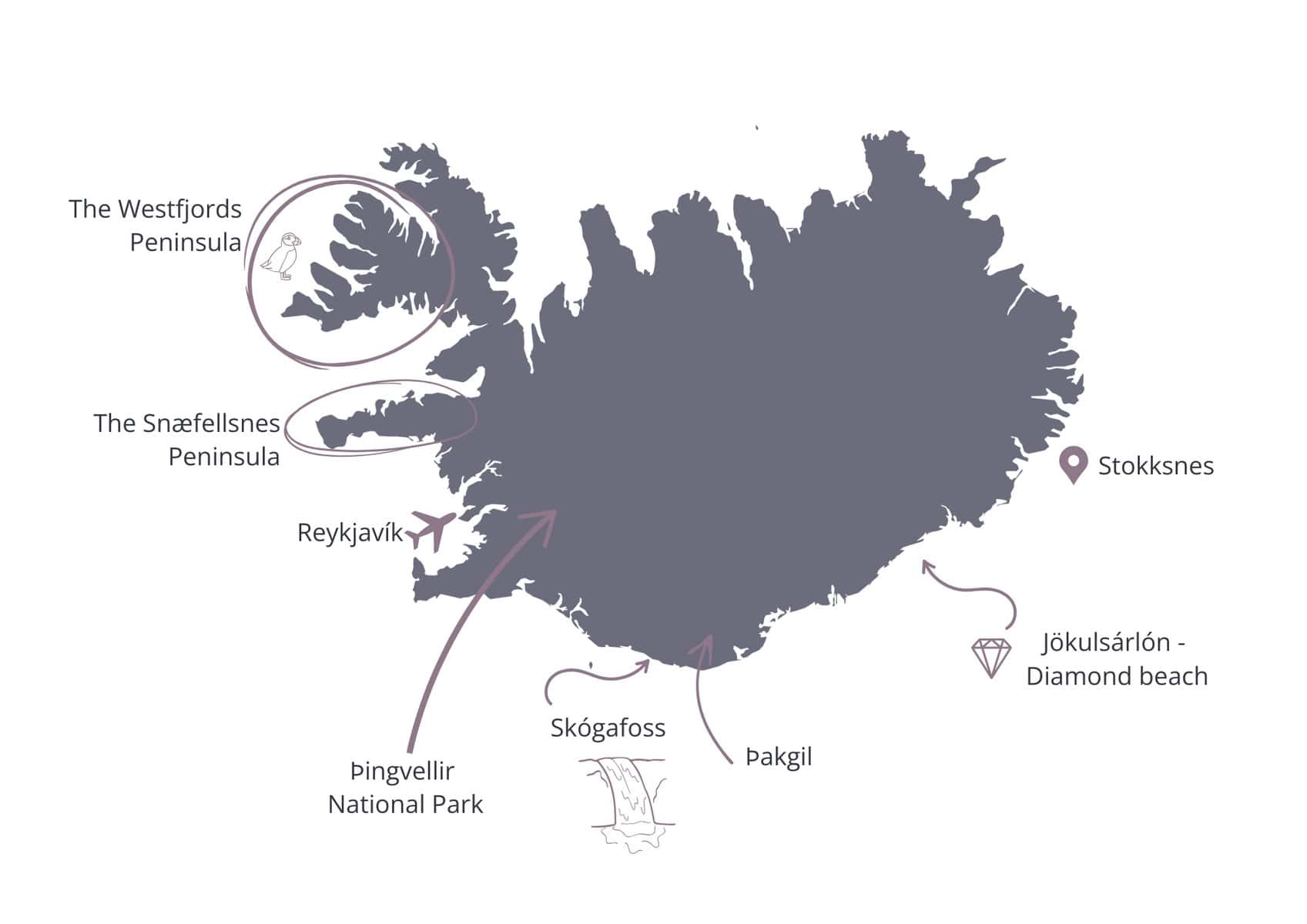
Map of my solo travel photography journey across Iceland — packed with my favorite photo spots, scenic drives, and hidden gems along the way. As you can see, Iceland is quite a large country, and I only managed to explore a small fragment of it.
Final Tip for Solo Photography Adventures:
Don’t try to see it all. FOMO (Fear of Missing Out) can be tempting, but you’ll get more out of your journey if you take your time and immerse yourself in just one or two regions. Focus on a few locations, and make the most of the sunrises and sunsets.
FAQ: Solo Travel & Photography in Iceland
1. What are the best photography locations in Iceland?
Iceland is packed with iconic photography spots! Don’t miss the Snæfellsnes Peninsula, Þingvellir National Park, Stokksnes, Huldujökull Glacier in Þakgil, Jökulsárlón Glacier Lagoon, and the dramatic cliffs of Látrabjarg in the Westfjords. Each location offers unique landscapes—from black sand beaches and waterfalls to glaciers and puffin colonies.
Hiking to Huldujökull Glacier with waterfall in Þakgil during my solo photography adventure in Iceland. Despite the pouring rain and cold, the breathtaking view made stepping out of my comfort zone worth it.
2. Is it safe to travel solo as a woman in Iceland?
Yes! Iceland is one of the safest countries in the world, making it a great choice for women traveling alone. Locals are helpful, crime rates are low, and the infrastructure is tourist-friendly—even in remote areas. Just be prepared for rapidly changing weather and long drives. If you want extra peace of mind in remote places, consider carrying a PLB (Personal Locator Beacon) or a Garmin InReach.
3. Do I need a 4×4 to drive to Iceland’s photography spots?
Not always. Many popular sites are accessible with a standard car, especially during summer. But if you’re planning to explore F-roads or head into remote areas like the highlands or parts of the Westfjords, a 4×4 is a must—and legally required.
Traveling solo through Iceland tested my limits, but it gave me the kind of confidence and creative spark I didn’t know I needed. If you want to level up your photography skills before your trip, grab my free e-book: 4 Key Tips to Break Away from Ordinary to Extraordinary Photography. Remember, your adventure has no limits—only the ones you set for yourself. Whatever your dream may be, chase it with your camera in hand.
Keep reading:

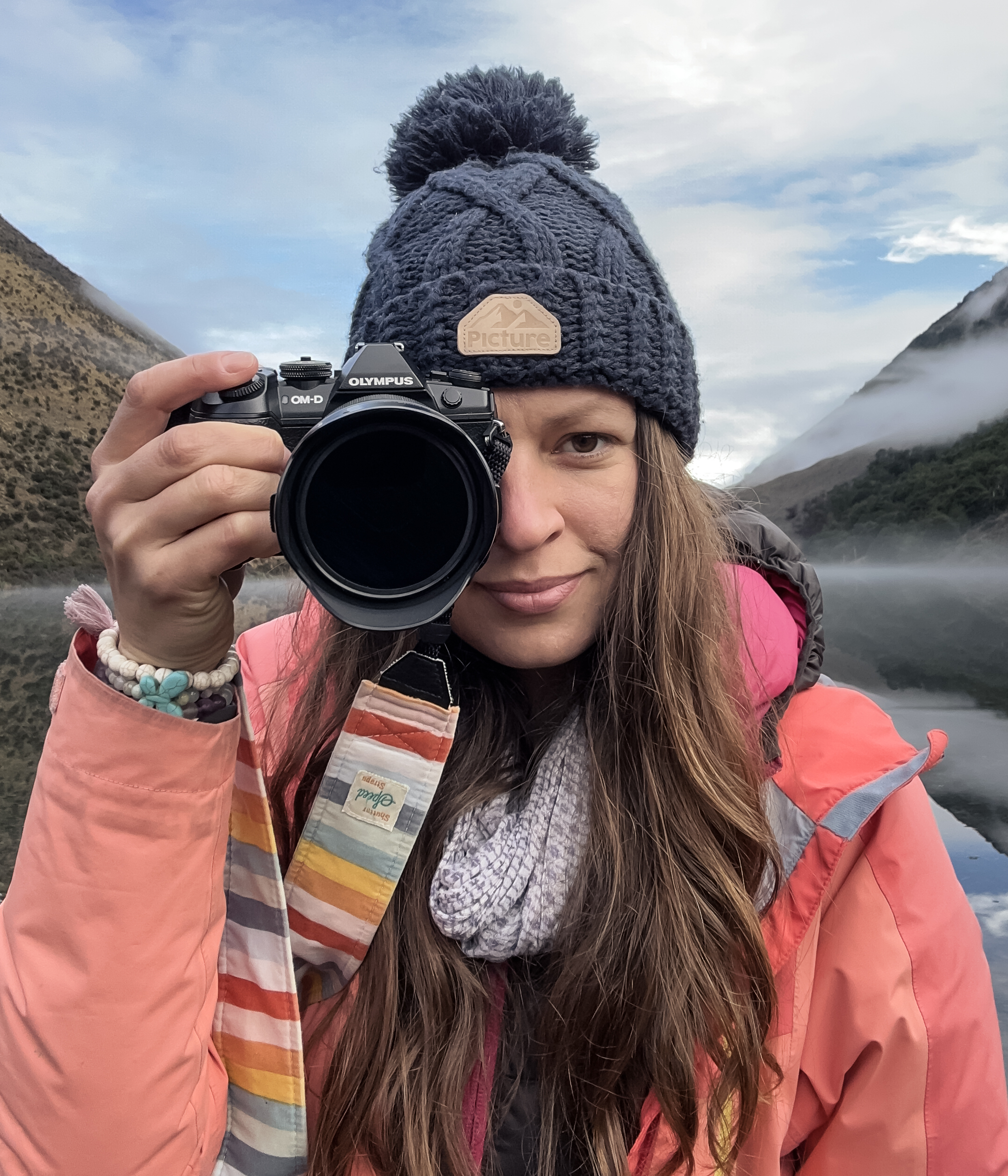
I’m Kat, an adventure and landscape photographer based in the South Island of New Zealand. My mission is to inspire and teach you—new and aspiring photographers with a passion for adventures, landscapes, nature, and travel. I’m here to help you transform your ordinary images into stunning ones you can be proud of. More about me